Subnautica 2 Interactive Map: Start by Checking Who Made It
Something odd happens when you search for a Subnautica 2 interactive map right now. You get a dozen results, most of them look professional, and several of them are describing a different game. I opened one that confidently listed Kelp Forest at 20-160 metres and Grand Reef at 200-400 metres, tagged as “predicted.”
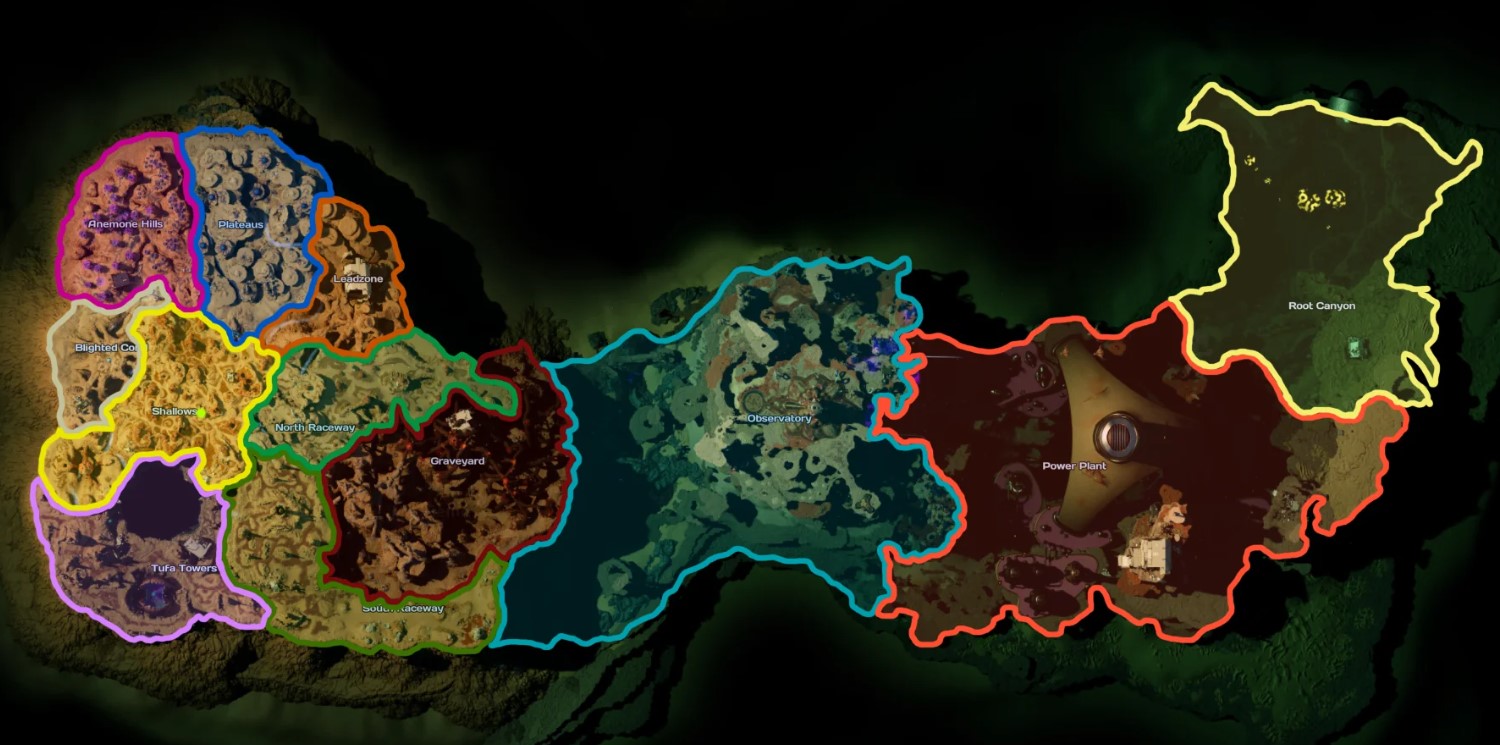
Those are Subnautica 1 biomes. They are not in Subnautica 2. The actual region list on Proteus reads nothing like that – Dolerite Spires, Necrolei Hills, Root Canyon, Karakorum Metal Farms. Somebody built a map site, had no data, and filled the gaps with the old game plus guesswork labelled as a prediction.
That’s the real problem with this keyword. Subnautica 2 has been in Early Access since May 14, 2026, the world is still being built, and the information vacuum has been filled faster than it’s been verified.
Why the In-Game Map Won’t Carry You?
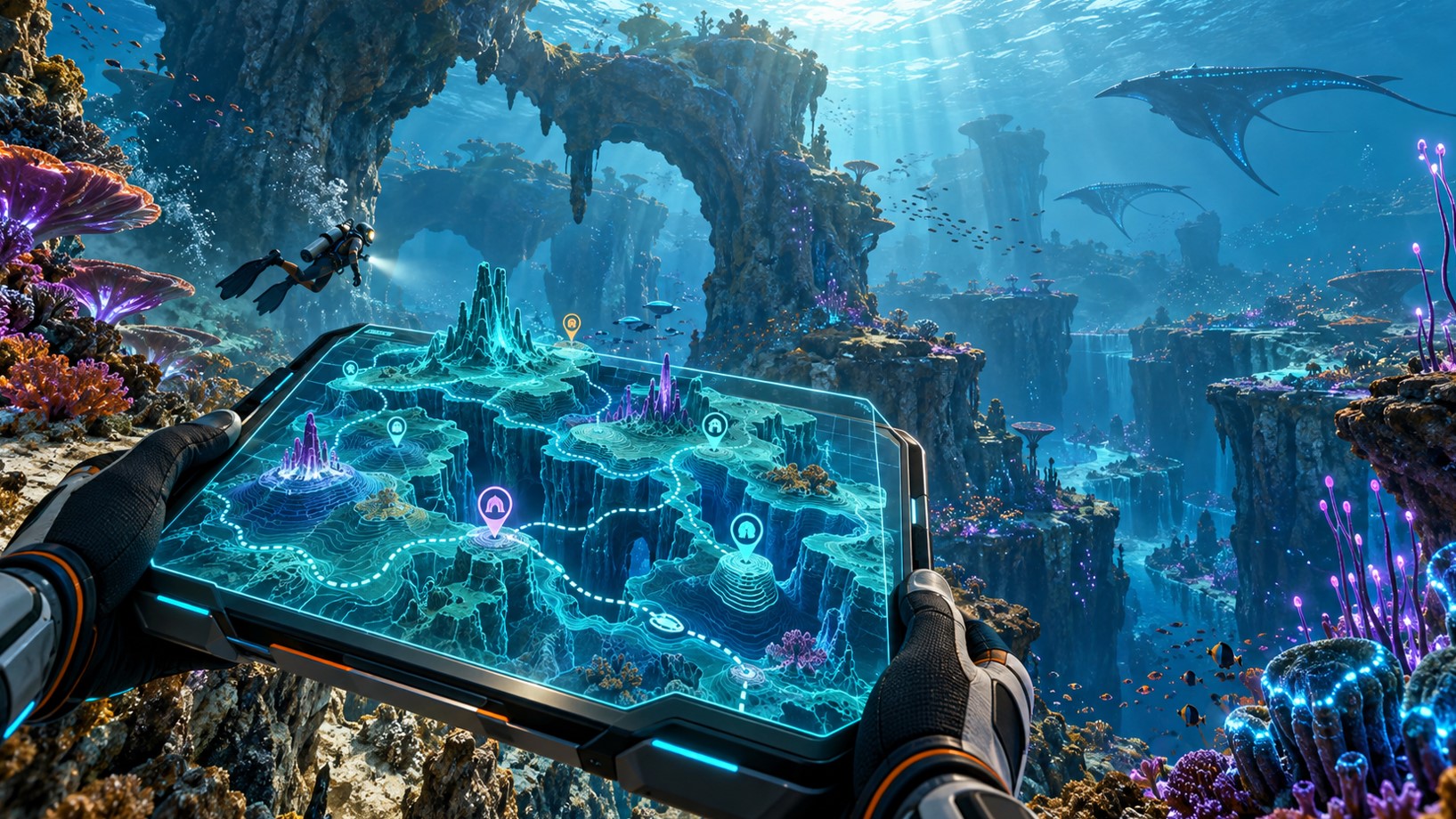
Subnautica 2 does have a map. That’s already a change from the original game, where the complete absence of one was a famous design choice people either loved or quietly resented.
The trouble is how limited it currently is. Players in the Steam discussions describe it as very small in the present Early Access build, and – this is the part that stings – showing your own position on it reportedly needs a community mod. A map that doesn’t tell you where you are is a picture, not a navigation tool.
What the game does give you from the start:
- A compass, available immediately, which players consistently say makes orientation easier than it was in either previous game.
- Black box signals that drop coordinates into your log as the story progresses.
- NoA’s hints, delivered by the ship AI that printed you.
- Placeable markers, which several players recommend as the single best habit to build early.
- Visual landmarks, like quartz embedded in coral or flashing work sites.
That’s a decent toolkit. It’s also one that breaks down in specific, repeated ways, and the complaints are consistent enough across the community to count as structural rather than individual.
Signals vanish once spent. Players report signals disappearing from the log after being followed, which makes retracing a winding route genuinely difficult.
Some signals arrive too early. One player followed a signal to a wreck that required a repair tool they couldn’t have yet. The signal was real; the sequencing was wrong.
Audio logs are the main delivery method. As the original poster in one widely-read thread put it, audio logs are an issue for many because a lot of people are visual learners. Story beats don’t always carry their own waypoint.
Progression can stall invisibly. One player spent sixteen hours in a late-game area, received new black box coordinates with no idea what triggered them, and only found the items they’d missed after backtracking an hour later.
None of that makes the game badly designed – plenty of players in those same threads argue the black box system is a fair compromise, and that heavier guidance would turn it into a walking simulator. But it does explain why half the playerbase has a second screen open.
What a Real Map Has That a Fake One Doesn’t?
Here’s the practical filter. Before trusting any Subnautica 2 interactive map, check it against these five things.
It names the actual regions. Proteus organises biomes inside larger Regions – Coral Gardens, Karakorum Ruins, Scorpius. If a site is showing you Kelp Forest, Grand Reef, Crash Zone or Safe Shallows, it’s recycling the 2018 game.
It gives depth ranges that look specific. Real data is untidy: 34-65 metres, 364-750 metres, 23-119 metres. Invented data rounds to hundreds.
It says which patch it was checked against. Early Access means the map changes. A map without a version stamp is a snapshot of an unknown moment.
It distinguishes confirmed from inferred – honestly. Some sites do flag confidence levels, which is good practice. It stops being good practice when fourteen of thirty-two markers are “predicted” and the predictions come from a different game.
It covers the Void. Any map that doesn’t account for the 0-3100 metre out-of-bounds region and the Shiver Leviathan that patrols it hasn’t been near the actual world.
Run those checks and most of the search results fall away. What’s left is the official Subnautica wiki’s SN2 section, a handful of Steam Community guides maintained by people actually playing, and the established gaming databases.
The Subnautica 2 Interactive Map Data That’s Actually Confirmed
| Region | Biome | Depth | Headline Resources |
|---|---|---|---|
| Coral Gardens | Shallows | 0-224 m | Coral Shavings, Fibrous Pulp, Water Slug, Medical Gel Sac |
| Coral Gardens | Dolerite Spires | 0-128 m | Lithium, Titanium, Quartz, Copper, Silver |
| Coral Gardens | Lead Zone | 34-65 m | Lead, Titanium, Copper, Quartz |
| Coral Gardens | Plateaus | 23-119 m | Silver, Titanium, Quartz, Copper, Cherimoya Rotsac |
| Coral Gardens | Necrolei Hills | 0-100 m | Acidic Raion Pouch, Necrolei Cyst, Silver, Water Slug |
| Coral Gardens | Graveyard | 0-266 m | Gold, Salt, Sulfur, Quartz, Copper, Titanium |
| Coral Gardens | North Raceway | 0 m+ | Copper, Quartz, Salt, Titanium |
| Coral Gardens | South Raceway | 0-85 m | Copper, Salt, Titanium |
| Karakorum Ruins | Overgrown Ruins | 0-600 m | Freesia Flower, Lead, Salt, Quartz |
| Karakorum Ruins | Karakorum Metal Farms | 0-500 m | Atacamite, Troilite, Celestine, Titanium |
| Karakorum Ruins | Root Canyon | 364-750 m | Celestine, Atacamite, Silver, Gold, Sulfur |
| Scorpius | Intermediary Basin | 0-250 m | Celestine, Dragon’s Scale Coral, Titanium, Quartz |
| – | Void | 0-3100 m | Nothing worth the trip |
A few things worth drawing out of that table:
- The Lead Zone is absurdly convenient. A 34-65 metre band that’s essentially a lead vending machine, and it sits inside the starting region. If you’re short on lead, that’s your answer and you don’t need a deep run to get it.
- Graveyard is the early gold source. Gold at 0-266 metres inside Coral Gardens means you don’t have to reach Root Canyon depths for it.
- Root Canyon is the current depth frontier at 364-750 metres, and Celestine plus Atacamite live down there alongside the Therapy Room and Stairway to Heaven wrecks.
- Two Leviathans are mapped. The Collector Leviathan patrols both Karakorum Metal Farms and the Intermediary Basin. The Shiver Leviathan lives in the Void, which is the game’s way of telling you the edge of the world is not a suggestion.
The Points of Interest Worth Marking
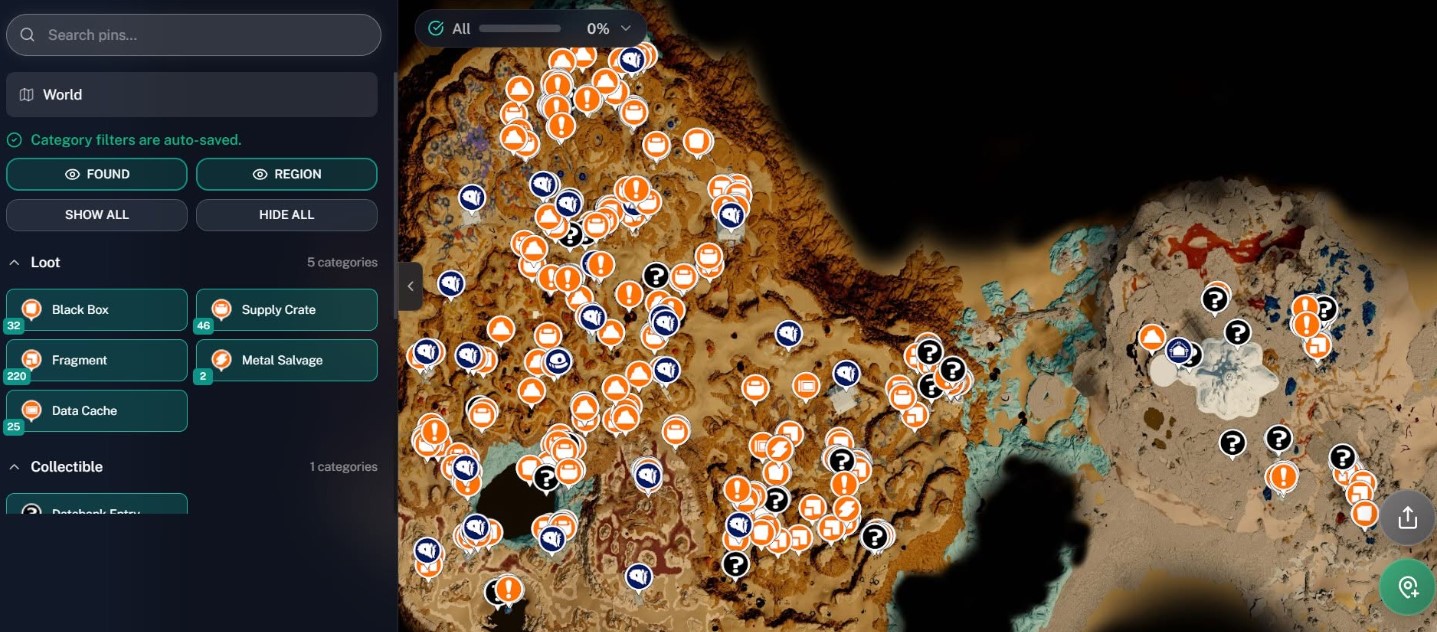
Resources are findable. Locations with names are the ones you’ll want pinned, because they’re where progression and story live.
- Lifepod and Welcome Center in the Shallows – your orientation anchors.
- Quaker’s Meetinghouse bunker and the Canteen wreck in Dolerite Spires.
- Lander Garage in the Lead Zone, which holds Tadpole fragments among others.
- Camp One, Old Habitat and Sophie’s Retreat across the Plateaus.
- Tailings Village and Tadpole Pens in the Graveyard, plus the Hot Cave Basecamp.
- Axum Observatory and the Rosetta Stone in the Overgrown Ruins.
- Anita’s Garden bunker in the Shallows, for early base-building reference.
That Lander Garage entry is the one to prioritise. The Tadpole is your vehicle – it takes interchangeable chassis, so fragments matter – and finding its parts early changes how much of this map you can reach.
Two Places That Aren’t There Yet
This is where a lot of map sites get caught out, because the names have leaked into circulation without the content existing.
Great Trench and Xanadu are both listed as potential future biomes. Xanadu is associated with the World Tree and an Alien Crypt, and the abandoned settlement sits at the tree’s base in the game’s lore. Depths and resources are unknown because they aren’t implemented.
If a map shows you either with confident depth bands and resource lists, you’ve found a site filling space rather than reporting data.
How to Read a Subnautica 2 Interactive Map Against an Early Access Build
The timing problem is the thing nobody mentions. Any map of this game has a shelf life measured in weeks.
Two updates have landed since launch. Update 1.1 brought general improvements, and Update 1.2 – the Buddy System Update added proximity chat and player revives to the co-op side, which supports up to four players and is the series’ first multiplayer.
What’s confirmed as coming, per creative director Anthony Gallegos, is a major update “later in the year” containing:
- An expanded world with an entirely new region.
- New biomes, creatures and resources.
- New tools and a new vehicle.
- A new story chapter.
No firm date has been given. The sensible reading is that any region or biome layout you memorise now is a snapshot, and the next big patch will add map that nobody has data for on day one.
Practical consequence: build the habit, not the memory. Learn to place markers, learn your compass headings between known points, and treat external maps as a cross-reference rather than a replacement for your own notes. That skill survives patches. A memorised resource route doesn’t.
Navigating Without Any Map At All
Worth covering, because a chunk of the community plays this way deliberately and the game supports it better than its predecessors did.
The ocean current mechanic can carry you between areas, which is both a transport system and a way to get badly lost if you don’t know where a current goes. Learning two or three current routes is faster than swimming and more reliable than guessing.
Your DNA modifications change what depths and conditions you can survive, which effectively gates the map by character build rather than by vehicle alone. Progression there opens routes as surely as any blueprint.
And the compass genuinely works. Pick a landmark, note the heading, swim back on the reciprocal. It’s old-fashioned and it never breaks on patch day.
FAQ
Does Subnautica 2 have an in-game map?
Yes, unlike the original, but players describe it as very limited in the current Early Access build, and showing your own position on it reportedly needs a community mod.
Which interactive map should I trust?
One that names the real regions – Coral Gardens, Karakorum Ruins, Scorpius – states which patch it was checked against, and doesn’t list Subnautica 1 biomes like Kelp Forest or Grand Reef.
What’s the deepest biome right now?
Root Canyon, at 364-750 metres, excluding the Void which runs to 3100 metres and exists to kill you.
Where do I find lead?
The Lead Zone in Coral Gardens, at 34-65 metres. It’s close to the start and it’s exactly what the name suggests.
Are Xanadu and the Great Trench in the game?
Not yet. Both are listed as potential future biomes with no confirmed depths or resources.
How many players can play together?
Up to four, in the series’ first multiplayer mode, with proximity chat and revives added in Update 1.2.
Will the map change?
Yes. A major update adding a new region, new biomes and a new vehicle has been confirmed for later in the year.
Trust the Compass Before the Website
What strikes us about this whole situation is that Subnautica has always been a series about not knowing where you are. That was the point in 2018. The absence of a map was the horror.
Subnautica 2 softens that – you get a compass, you get a map of sorts, you get an AI dropping coordinates – and the result is a game that’s kinder to newcomers while still leaving you genuinely disoriented at four hundred metres in the Root Canyon.
What’s filled the remaining gap isn’t better in-game tools. It’s a web full of sites that would rather publish a guess than admit they don’t know yet. Thirty-two markers, fourteen predicted, biome names borrowed from a seven-year-old game.
So the actual advice is small and slightly unfashionable. Open the official wiki when you need depths. Keep a Steam guide bookmarked if the author is clearly playing. Place your own markers obsessively. And check the version stamp on anything claiming to map a world that’s still being built.
The ocean’s going to get bigger before the year’s out. Learn to find your own way around it.
If this spared you a resource run to a biome that doesn’t exist, pass it along on X, Reddit or your co-op group chat – small writing teams travel on word of mouth and nothing else. Bookmark it too, because the next major update adds an entire region and we’ll be revising these tables rather than filing a fresh page. And if creative or commercial collaboration brought you here, write to the BandurArt team directly – our coordinates don’t change.