
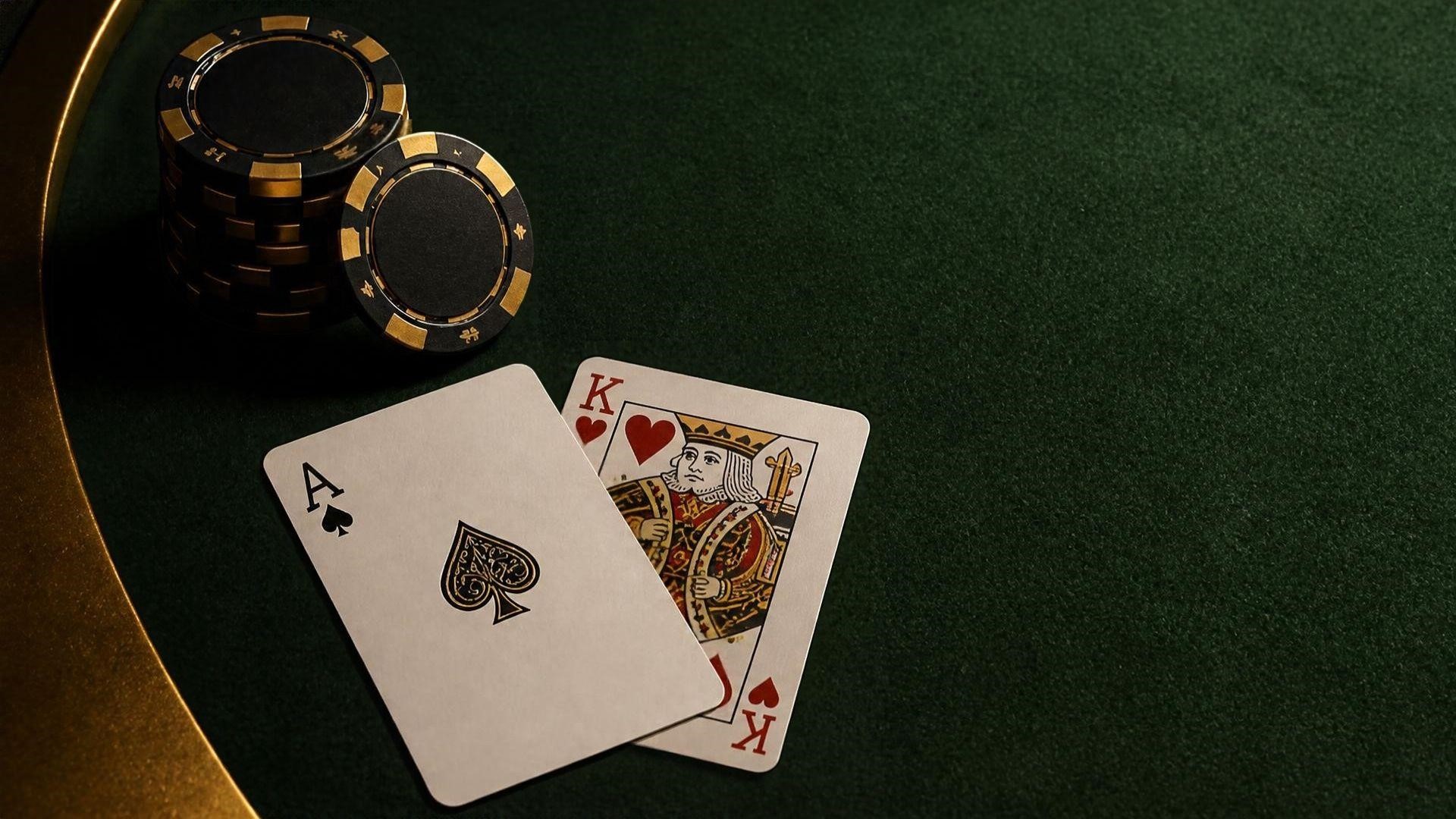
History of Card Design: 19th-Century Indices and Courts
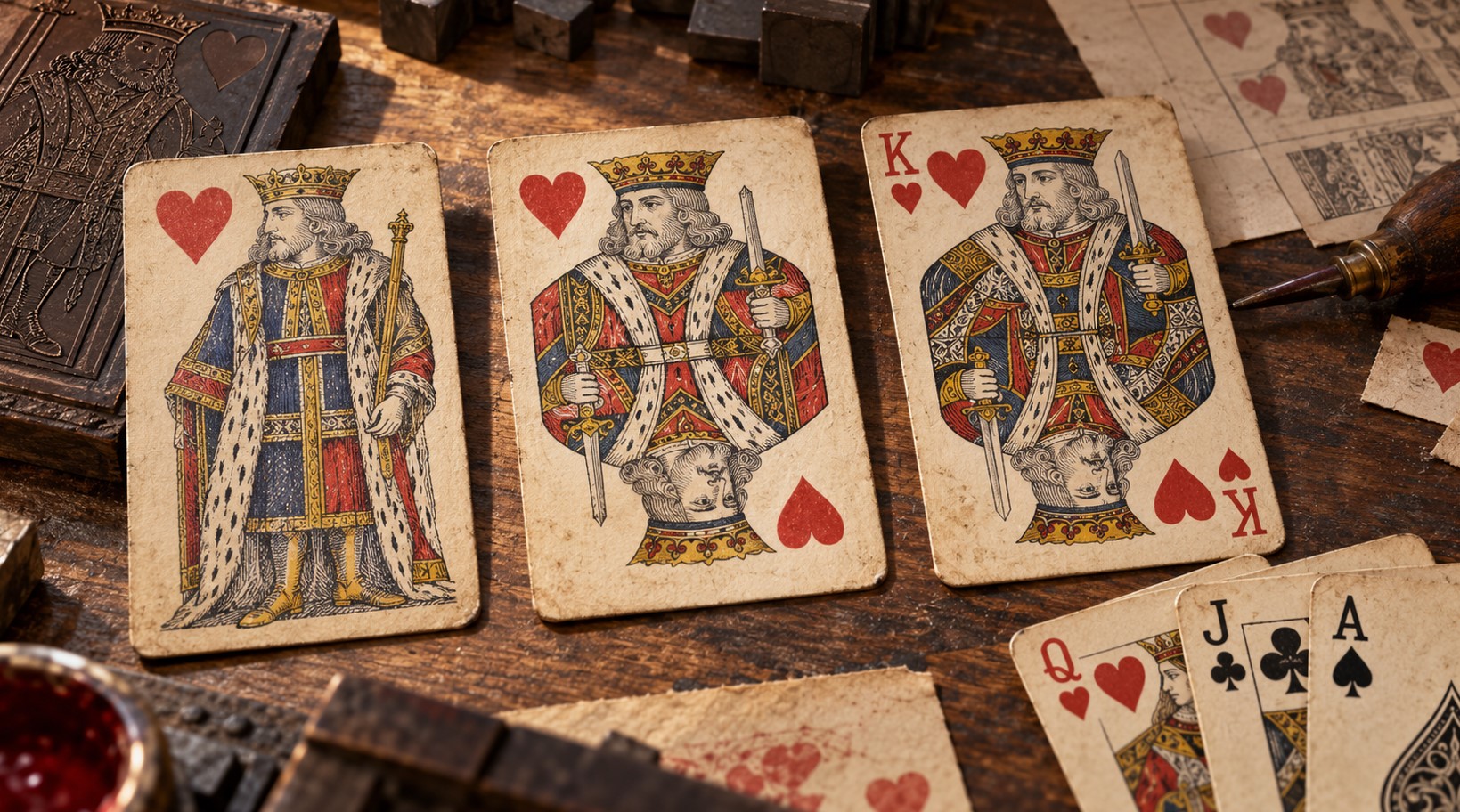
A king printed on an eighteenth-century playing card usually had one unmistakable orientation. Turn the card upside down and the figure appeared inverted. Identifying its denomination could also require exposing much of the illustration, particularly when several cards overlapped in one hand.
Two alterations addressed these inconveniences. Double-ended court figures made orientation less consequential, while corner indices reduced the surface needed for identification. Their separate development and nineteenth-century adoption established conventions still visible on modern playing cards.
Why Nineteenth-Century Playing Cards Needed Better Readability
Traditional court cards depicted full-length kings, queens, and jacks. Rotating an inverted figure made it easier to recognise but could inadvertently reveal information about a concealed hand. Unindexed cards presented another difficulty. Their denominations depended on suit arrangements or central illustrations, leaving limited information visible when cards overlapped.
These historical features remain relevant to contemporary formats, including live blackjack ontario. Launched in 2024, ToonieBet serves Ontario’s regulated online gambling market and reports a catalogue exceeding 3,000 games, including conventional table games and live-dealer formats.
The comparison concerns playing-card design rather than the specific equipment used by the operator. Modern card faces commonly retain compact rank-and-suit markings and reversible court artwork, both refined through earlier manufacturing developments. Neither improvement required the other, as surviving nineteenth-century packs demonstrate.
Reversible Court Cards: From European Precedents to British Adoption
Reversible figures appeared in European playing-card traditions before Victorian manufacturers popularised them. An 1814 Spanish-suited pack produced by Clemente de Roxas in Madrid contains double-ended courts alongside single-ended numeral cards. British adoption accelerated during the late 1840s and 1850s. Manufacturers including Woolley, Goodall and De La Rue developed versions using different illustration and printing techniques.
Double-ended designs appeared at London’s Great Exhibition in 1851. Their presence documents commercial production by that date, although the arrangement itself was considerably older. Some manufacturers repeated the upper portion of an existing court illustration at both ends. Others created new compositions, adjusting clothing, arms, and decorative elements around a central division.
Card historian Ken Lodge’s examination of surviving packs identifies these variations. Reversibility did not require perfect mirror symmetry. The defining feature was recognition after a 180-degree rotation. Single-ended designs remained available in Britain for decades, extending the transition into the late nineteenth century.
The 1864 Corner-Index Patent That Changed Card Identification
Corner indices addressed a problem that redesigned court illustrations could not solve: identifying overlapping cards without revealing their central artwork. On February 9, 1864, Saladee received American patent number 41,587 for an arrangement combining a denomination with a suit emblem.
Philadelphia manufacturer Samuel Hart produced cards using the patented system that year. Their compact markings allowed rank and suit to be recognised from a narrow exposed corner. Later designs placed identifiers in opposite corners, preserving readability after rotation. Four-corner arrangements also appeared, accommodating different fanning directions.
These developments proceeded independently of reversible court artwork. A surviving De La Rue pack dated around 1860 contains double-ended figures but no printed indices. Its construction establishes that manufacturers adopted the improvements at different times. The 1864 patent represents an American milestone, not the first appearance of every form of card identification worldwide.
Why Competing Designs Failed to Become the Modern Standard
Compact letters and suit symbols were not the only solution manufacturers considered. Andrew Dougherty’s Triplicate cards, introduced during the mid-1870s, reproduced miniature card faces near the corners. The approach preserved visual detail but occupied more space than abbreviated indices.
De La Rue’s Dexter system incorporated shortened denominations into suit symbols. Woolley’s Eureka cards experimented with alternative markings, while Dougherty’s 1883 Indicator patent positioned identifiers beyond conventional borders. Manufacturing imposed additional constraints. Existing illustrations sometimes lacked space for indices, forcing printers to reduce figures or alter their placement.
Lodge documents a Goodall example from approximately 1878 in which cutting removed part of a printed index. A Willis pack dated around 1875 offers another revealing specimen. Its original numeral cards lacked indices, but a previous owner added handwritten identifiers. The modification records practical demand for a feature manufacturers had not yet adopted uniformly.
How Did Corner Indices and Reversible Courts Reshape the Modern Deck?
By the late nineteenth century, compact indices and double-ended courts were increasingly familiar in Anglo-American playing cards. Their usefulness depended partly on the game. Compact markings aided identification in concealed, overlapping hands, while openly displayed cards had less need for the same arrangement.
Corner indices also changed illustration. Once denomination and suit could be read independently, manufacturers gained freedom to alter central artwork without compromising recognition. Contemporary live-dealer games retain the visual language established through these historical developments. Ontario regulates such online gambling separately from the card-design standards discussed here. ToonieBet identifies Canadix Limited as its operator, with iGaming Ontario operating agreement OPIG1280338.
Ontario restricts regulated online gambling to those of legal gambling age in the province who are physically located within Ontario. Spending limits, self-exclusion and confidential assistance through ConnexOntario remain safeguards against gambling-related harm. Surviving decks reveal decades of experimentation. The familiar modern card face emerged from separate solutions to orientation, identification, and nineteenth-century printing constraints.