
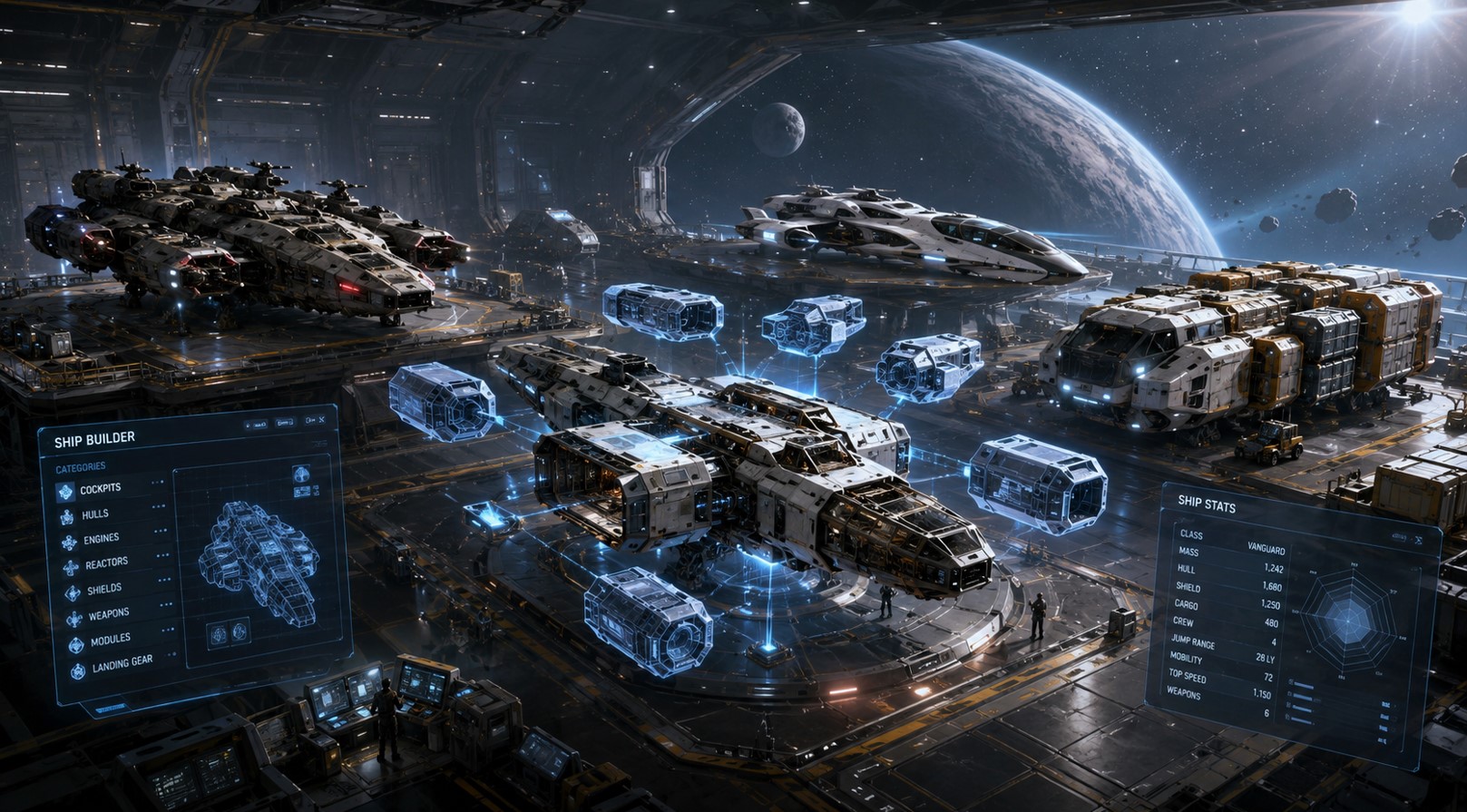
Starship Builds in Starfield That Actually Hold Up
Let’s start with the truth every Starfield player learns the hard way. You’ll sink way more time into the ship builder than you ever planned. One minute you’re swapping a fuel tank. Three hours later it’s 2 a.m., you’ve spent 400,000 credits, and you’re still nudging a wing plate half a pixel to the left. Sound familiar? Yeah. You’re not alone. The ship builder is easily one of the most beloved – and most cursed – parts of the whole game. Fans on Reddit and Steam have called the option of creating custom starship builds in Starfield is the best thing and a total headache in the same breath. Both takes are correct. So let’s break down how it really works, what the community has figured out, and how to stop bleeding credits on parts you don’t need.
Because once it clicks, it’s genuinely hard to put down.
How Does the Ship Building in Starfield Actually Work?
First, a reality check that trips up a lot of new players. You can’t build a ship from scratch. Every build starts from a ship you already own, which you then modify at a ship technician near landing pads in populated areas across the Settled Systems.
The parts never sit in your inventory either. They exist only as purchasable options inside the builder menu. So there’s no hoarding components in your cargo hold for later – you buy them and install them right there, or you don’t.
A few hard rules govern everything you do in that menu:
- You can only equip parts that match your current reactor rating – better reactors unlock better components.
- You must always have exactly one reactor, one shield, and one grav drive fitted.
- Every module adds Mass, which drags down your speed and jump range, but also adds Hull, making the ship tougher. Mass and Hull always move together.
That last point is the balancing act at the heart of every build. Want a floating fortress with a hundred cargo containers? Cool, but it’ll fly like a brick and sip fuel like it’s going out of style. There’s always a trade-off. That tension is exactly what makes the system fun once you get it.
The Skills You Actually Need
Here’s where a lot of players get stuck, and honestly, it’s a fair gripe. Your ability to build good ships is gated behind character skills, not just credits. You can be swimming in money and still be locked out of the good parts. That design frustrates people, and you’ll find plenty of Steam threads venting about it.
But once you know which skills matter, the path clears up fast.
Starship Design in the Tech tree is the big one. Without it, you’re locked out of better modules even if your Piloting rank could technically support them. Higher ranks unlock higher-tier components within each class. The community tip here is gold: put your first point in early, because the rank-up challenge requires installing unique modules you haven’t used before. You need 30 unique module installations to hit Rank 4, so the sooner you start experimenting, the faster you unlock the good stuff.
Piloting is non-negotiable, too. It gates which ship classes you can actually fly. Without higher Piloting ranks, you’re stuck with Class-A ships – the smallest, weakest vessels with the feeblest reactors.
| Skill | What It Unlocks | Priority |
|---|---|---|
| Piloting | Higher ship classes (B and C) and better handling | Essential |
| Starship Design | Higher-tier modules within each class | Essential |
| Targeting Control Systems | Lock onto and disable enemy subsystems | High for boarding |
| Engine Systems | Better maneuverability and top speed | Medium |
| Shield Systems | More shield HP and faster regen | Medium |
Notice Targeting Control Systems on that list. At Rank 1, you can lock onto a ship and target individual systems – engines, weapons, shields, grav drive. Disable the engines and the enemy is dead in space, ready to board. That leads us to one of the community’s favorite tricks.
The Community’s Favorite Way to Fund a Build
Want to know how experienced players fund their dream ships without going broke? They steal parts.
Here’s how it works. If you board and commandeer an enemy ship during combat, that ship becomes yours. You can fly it to a technician, strip it for the parts you want, sell the rest, and pocket the difference. Some of the best components in the game come from stolen ships piloted by high-level enemies. It’s how a huge chunk of the community sources rare parts without spending a single credit.
One big warning, straight from experienced players: check the cargo before you fly a stolen ship anywhere populated. If it’s carrying contraband, you’ll get scanned and arrested the moment you land in UC-controlled space. Rookie mistake. Don’t be that person.
Another money tip that pops up constantly on Steam: don’t waste credits on tiny reactor upgrades. Bumping from 16 power to 18 does basically nothing, and reactors are among the priciest parts in the game. Wait and jump from 16 to 20 instead – that’s a real upgrade that can fully power two extra weapons.
Building for Your Playstyle
Not every ship needs to be a war machine. The smart move is building around what you actually do in the game. Here are the archetypes the community leans on:
- Explorer – stack fuel tanks, a high-quality grav drive, big cargo holds, and diverse hab modules with workstations. You want range and storage. Keep a couple of weapons for emergencies, but agility is secondary.
- Smuggler – maximum cargo including shielded bays, strong shields, and a powerful reactor. Survivability beats firepower here. If things go sideways, the goal is to escape, not brawl.
- Combat build – run at least two weapon types. Lasers to strip shields fast, then ballistics or missiles to shred the hull once shields are down.
That last combat tip matters more than people realize. The community consensus is to distribute power so lasers come online first, then reassign power to ballistics or missiles once shields are stripped. In tougher fights, keep a little output on lasers so the enemy can’t regen their shields while you work the hull. Particle beams are a solid all-rounder if you’d rather not micromanage.
And whatever you build – cargo is king in the Bethesda game. There’s a running joke in the community that no matter how much cargo you add, it’s never enough. One veteran put it bluntly: add more cargo, more, more still, keep going. They’re not wrong.
The Glitches and Headaches Worth Knowing About
Real talk – this is a Bethesda game, so jank comes with the territory. A few known issues the community has flagged over the years:
Storing gear on your ship can be risky. There’s a long-standing bug where items placed on armory mannequins or stored in your ship can vanish into the void when you modify the ship or capture and sell another vessel. The community rule of thumb? Don’t store precious loot on your ship. Use an outpost or safe container instead.
Modded ship parts can also cause chaos. Players report parts and whole sections disappearing from the builder when a mod updates – or sometimes for no reason at all, because, well, Starfield. If you rely heavily on modded parts, keep a backup save and don’t be shocked when things go wonky.
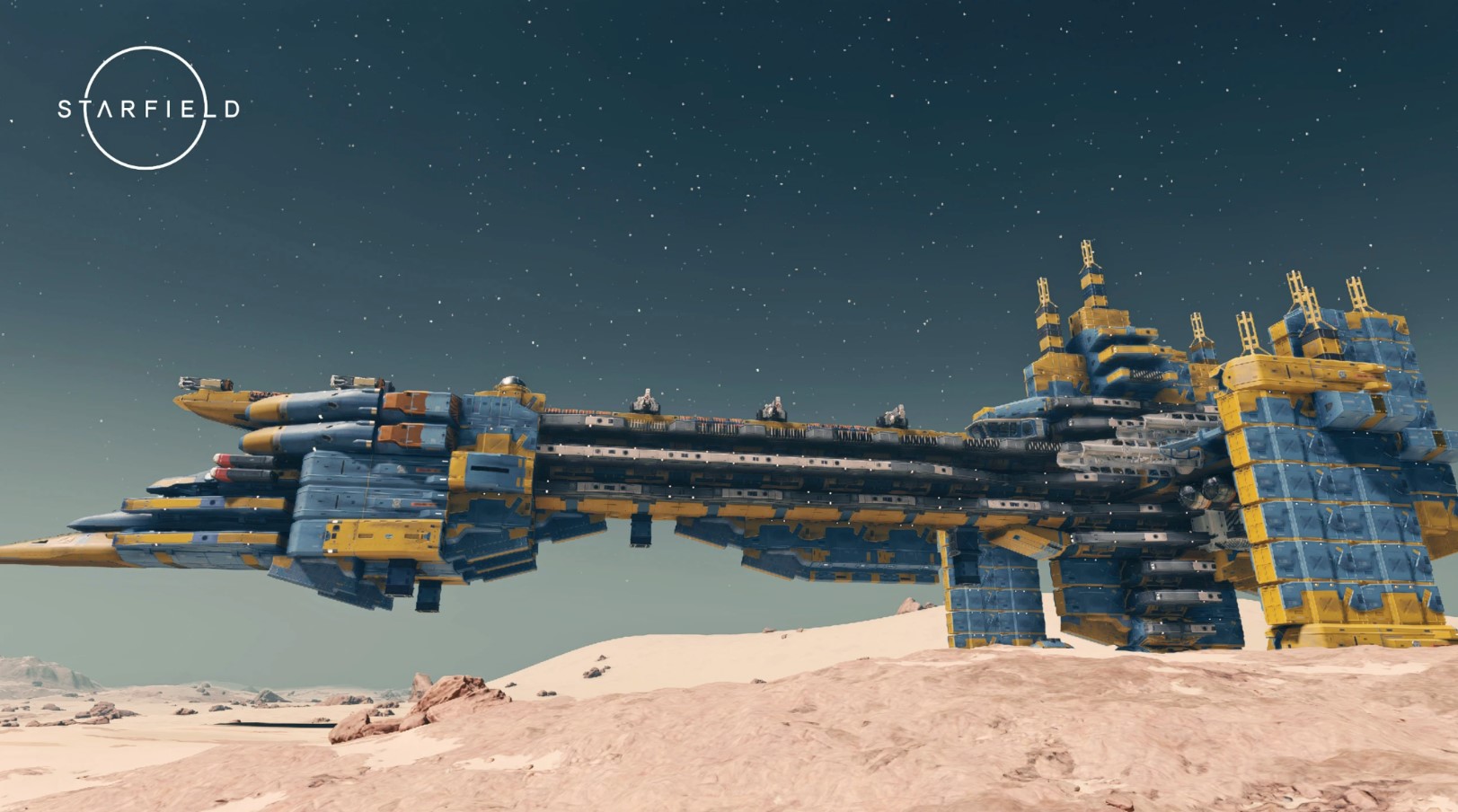
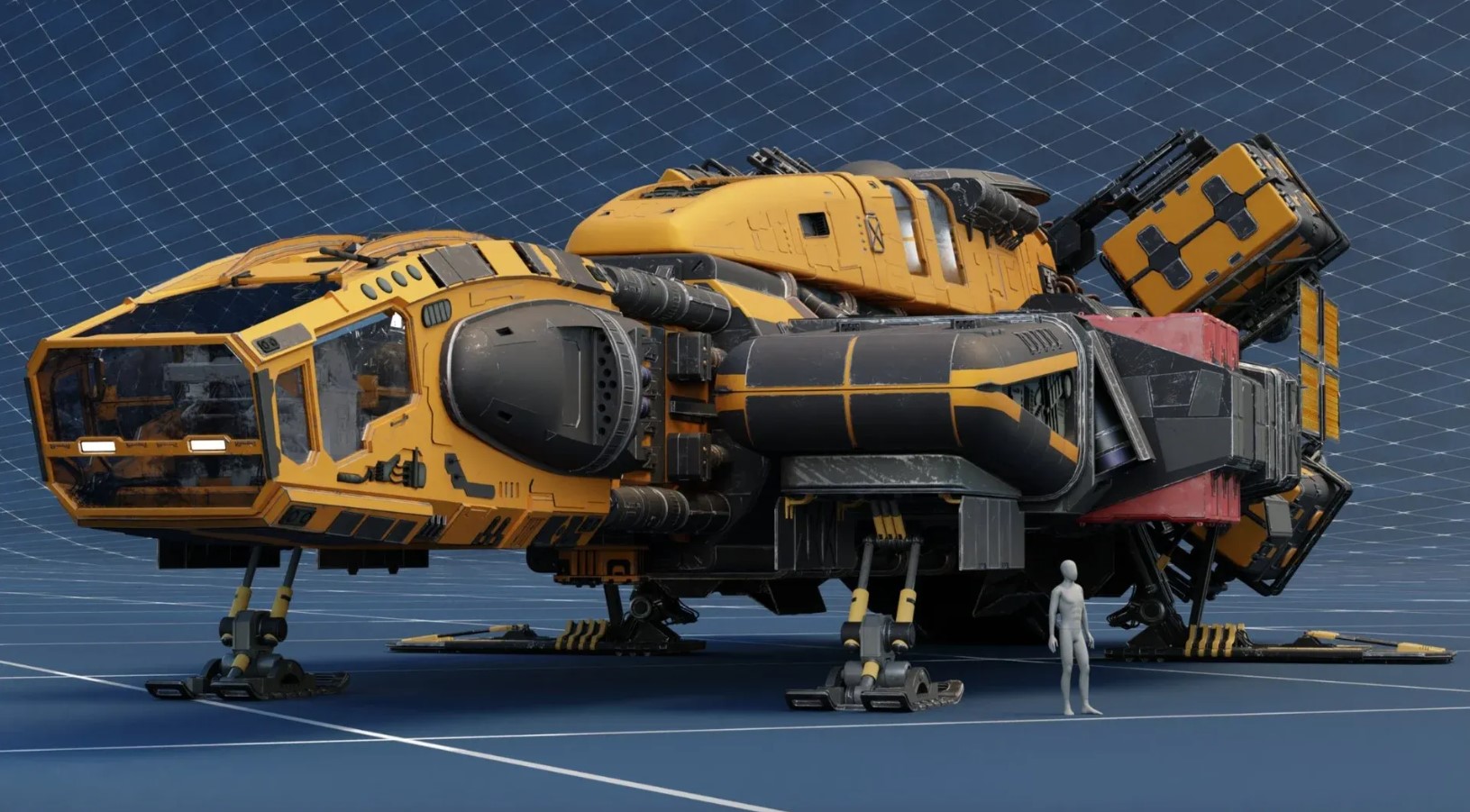
On the creative side, the community has gotten wildly inventive. Players use “flip glitches” and “drop glitches” – no mods required – to hide weapons inside hulls and meld wing parts together for smoother, less blocky lines. Folks have recreated everything from the Death Star to absurd cargo-hauler monstrosities. The ceiling on creativity here is genuinely sky-high.
FAQ
Can you build a ship from scratch in Starfield?
No. Every build starts from a ship you already own, which you then modify at a ship technician in populated areas.
What skill do I need to build better ships?
Starship Design in the Tech tree is essential for higher-tier modules. Piloting is required to fly higher ship classes.
How do I get rare ship parts cheaply?
Board and commandeer enemy ships in combat, then strip them for parts at a technician. Just check the cargo for contraband first.
Why can’t I equip certain parts?
Parts are gated by your reactor rating and your Starship Design rank. Better reactors and higher skill ranks unlock better modules.
What’s the best weapon setup for combat?
Run two types – lasers to strip shields, then ballistics or missiles for the hull. Manage your power so lasers fire first.
Is it safe to store items on my ship?
Not really. A known bug can make stored gear vanish when you modify or sell ships. Store valuables at an outpost instead.
How much cargo should I add?
As much as you possibly can. The community’s unofficial motto is that you can never have too much cargo space.
Wrapping It Up
So there you have it. Starship builds in Starfield are equal parts rewarding and maddening, and that’s kind of the whole appeal. The system asks you to juggle skills, reactor power, mass, and credits – but once those pieces click, you’ll be designing vessels that put Bethesda’s own presets to shame.
My honest advice? Start small. Modify your starter ship, put an early point into Starship Design, steal a few parts to keep costs down, and build toward the playstyle you actually enjoy. Don’t chase the biggest ship right away – chase the one that fits how you play.
And keep an eye on those updates. Starfield keeps evolving, with balance tweaks landing regularly through 2026, so the meta shifts and new toys arrive. The wasteland of space is always worth another look. Now go build something ridiculous.
P.S. If this guide saved you some credits or headaches, throw us a little support – share the post across your socials and drop it into your bookmarks so it’s handy next time you’re deep in the ship builder. Every share genuinely helps our team keep the guides coming. And if you’re after creative or commercial collaboration, reach out to the BandurArt team directly – we’d love to hear from you.