Upcoming Switch 2 games and the shape of the 2026 launch window
Nintendo’s successor hardware landed in mid-2025, and the calendar between that launch and the back half of 2026 is the period developers and players measure every announcement against. The short question on most desks is simple: which upcoming Switch 2 games are actually shipping, which slipped, and which only exist as a teaser. The longer question, the one that matters to a studio, is whether the tools, middleware, and certification path are mature enough to commit a release date without a late-stage patch cycle. This article focuses on the second question, because its answers shape production planning, marketing windows, and platform-holder relationships more than a single date in a press release.
Rather than catalog every rumor, this piece organizes the confirmed pipeline around three lenses that affect development work directly: platform readiness, first-party commitments, and third-party porting realities. It is written for producers, technical directors, porting leads, and technical artists who need to understand the practical shape of the next eighteen months. The baseline is the maintained Wikipedia list of confirmed and announced Switch 2 titles, cross-checked with hardware coverage and partner showcases, including the recent Indie World showcase that gave the indie pipeline its first dedicated beat of the cycle. Release windows and feature claims elsewhere in the article are drawn from public materials and from the practical limits of the hardware rather than from speculation.
What the platform actually offers developers in 2026
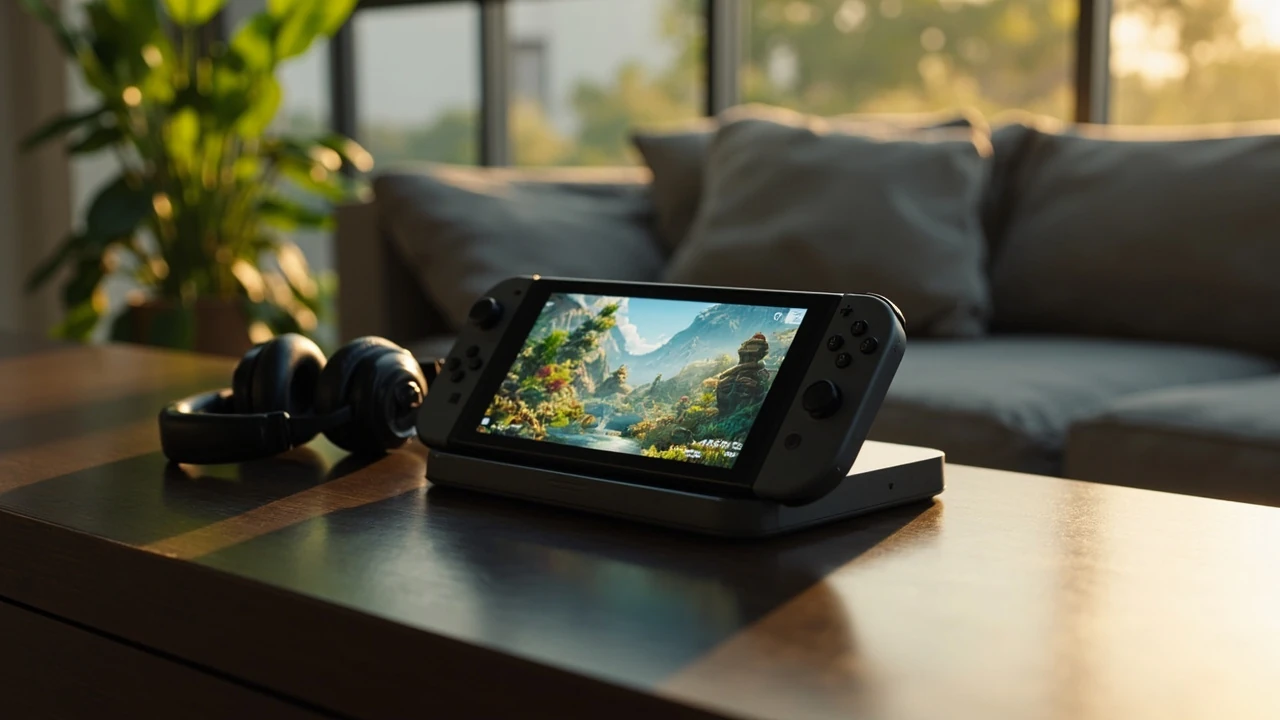
Any honest survey of upcoming Switch 2 games has to start with what the platform can sustain, because the title list is only as useful as the engine and middleware support underneath it. Switch 2 ships with a custom Nvidia Tegra-derived SoC, more memory than its predecessor, an OLED-class display option on the higher SKU, and a higher docked throughput ceiling. The practical impact for a team porting an existing PC or last-generation console build is a wider resolution and asset budget than the original Switch could absorb, but it is not an open-ended PC budget. A team that treats the new device as a low-spec PC will still hit a memory wall on streamed scenes and a thermal ceiling on docked frame pacing before they hit a CPU bottleneck.
The other practical shift is the developer portal and toolchain. Nintendo’s NDA-gated documentation covers the new graphics API surface, the storage and I/O paths, and the new dock and handheld modes. The most useful thing an integrator can do in 2026 is build against the published minimum target profile and verify against the official hardware dev kit, not against retail hardware. A recurring failure mode shows up in late ports: a build looks stable on a development kit and then reveals shader compile stutter or asset streaming hitches on retail units once the firmware is final. The only mitigation is early firmware access and frequent certification builds.
Confirmed hardware assumptions a porting lead should lock in
- Docked target profile at parity with last-generation console performance for a typical third-party port, with platform-specific thermal and acoustic ceilings still applying.
- Handheld profile as a first-class target, including dynamic resolution, asset LOD, and audio mix considerations rather than a downscaled afterthought.
- NVN-derived graphics API surface, with feature-level differences that affect compute use, async compute ordering, and shader model selection.
- Higher-tier storage I/O that changes asset streaming budgets, which in turn changes how memory-resident scenes are designed.
- Display panel variations between OLED and LCD SKUs, which affect color grading, contrast, and HDR fallback paths.
Those assumptions are not a marketing list. They are the constraints a producer puts in front of the team before scope is frozen, because they directly determine texture budgets, draw call counts, and the realistic upper bound for a 60 fps target. The upcoming Switch 2 games that have shipped on time and clean share one trait: their technical design doc was written against these assumptions, not against a wish list.
First-party commitments shaping the launch wave
Nintendo’s own studios are the spine of any analysis of upcoming Switch 2 games, because first-party releases set the marketing cadence that third parties plan around. The maintained list of Switch 2 games is the most reliable single source for confirmed and announced titles, and the pattern across it is the most useful signal: Nintendo is staggering its own releases so that the second half of 2025 and the first half of 2026 are not crowded with overlapping tentpoles, and the second half of 2026 is where a meaningful share of the platform’s first-party momentum is concentrating.
For a developer or publisher, that cadence is the planning canvas. A third-party title announced for the same window as a major first-party release absorbs a different marketing cost than one announced in a quieter week. The sub-sections below treat the first-party slate as production data rather than a wish list.
Flagship and family-facing pillars
The first-party pillar releases are the titles a producer treats as immovable when planning a competing launch window. They include mainline entries from Nintendo’s marquee franchises and the family-facing or lifestyle titles that anchor a quarter. The shared design trait across these pillars is that they are built for the hardware from the first milestone, which is why they tend to ship on schedule and with a smaller patch tail than a port.
Remaster and remake considerations
Several entries on the Switch 2 list are not new builds. They are remasters or remakes of last-generation software, and the engineering reality of those projects is different from a greenfield title. A remaster often ships as a port of an existing renderer, with new assets, updated UI, and platform feature integration. The risk in 2026 is treating a remaster as a low-effort port. The memory and storage budgets are wider, but so is the consumer expectation of stable performance, and a remaster that ships with frame-pacing issues on the new hardware reads as a careless port even when the underlying build is sound.
Third-party slate: ports, exclusives, and timed windows
The third-party calendar is where the most movement happens, and it is also the part of the upcoming Switch 2 games slate that shifts the most between news cycles. The general pattern visible in 2026 is that AAA third parties are using the platform as a parity target rather than a leading platform, and the strongest announcements are timed with platform-holder marketing beats rather than with general industry events. The earlier Indie World showcase illustrates the approach: it was structured to keep the indie pipeline visible during a quarter that would otherwise be defined by major publisher releases, and the announced titles were positioned as shippable on the new hardware without a parity compromise to the PC build.
Three sub-patterns are worth tracking. Ports from PC and last-generation consoles continue to dominate, with the engineering choice often being whether to target parity with the weakest last-generation SKU or to design against the new hardware’s higher ceiling. Native exclusives, where the platform is the lead SKU, are still rare but growing, and they are almost always either platform-aligned IPs or smaller projects where the studio has a close relationship with Nintendo. Timed windows, where the platform build ships after the lead platform, are the most fragile pattern in production terms, because a slipped lead platform almost always slips the Switch 2 build, and the certification submission slot has to be renegotiated.
Porting cost drivers a producer should plan for
- Shader and material translation, including any compute or async compute paths that the original engine was not designed for.
- Asset streaming rework to take advantage of the higher storage I/O, with associated memory budget retuning.
- Input and account system integration, including any new platform services that the lead platform build did not have to ship against.
- Certification pre-pass for the first-party technical requirements checklist, run early rather than in the final six weeks.
- Performance validation across docked, handheld, and sleep-resume states, with platform-specific telemetry capture.
These are not exotic risks. They are the recurring production reasons a Switch 2 port slips, and they are also the reasons a well-run studio treats a port budget as roughly seventy to ninety percent of a current-generation console port rather than a marginal cost on top of the lead platform build.
Indie and mid-tier pipeline
The indie and mid-tier pipeline is the largest single category by title count on the maintained Switch 2 list, and it is also the most useful category for understanding what kind of build the platform supports at scale. A typical mid-tier title on Switch 2 in 2026 is a Unity or Unreal Engine build that targets 60 fps handheld and 60 fps docked at a moderate resolution, with a small set of post-processing features and a tight memory budget. The Indie World showcase was effectively a curated statement that the platform is healthy at that tier, and the announced titles read as a portfolio rather than a series of one-offs.
For a developer, the practical lesson from the indie pipeline is that the platform rewards a build that is engineered against the hardware from the first prototype rather than retrofitted. An indie build that ships clean on Switch 2 in 2026 is almost always one that used the official middleware templates, integrated the platform services early, and ran a certification pre-pass at the beta milestone rather than at the release candidate. The ones that ship messy are the ones that treated the platform as a port target rather than a primary one.
| Tier | Typical scope | Engineering posture | Realistic 2026 risk |
|---|---|---|---|
| First-party pillar | Flagship IP, full design team, multi-year | Native, hardware-first | Schedule slip into late 2026 or 2027 |
| AAA third-party port | Parity or near-parity with last-gen console | Port of an existing renderer | Certification rework if parity target moves |
| Mid-tier third-party | Defined scope, often genre-focused | Lead-platform build with platform pass | Timed window slippage from lead platform |
| Indie native | Tight scope, strong art direction | Platform-aware from prototype | Feature scope creep past platform service limits |
| Remaster or remake | Existing last-gen codebase | Renderer port with new assets | Frame-pacing or memory regression on new hardware |
The table is a planning aid rather than a market forecast. The risk column describes the most common production failure mode observed across ports and native builds in the 2025-2026 transition, based on the pattern of slips and patches visible in the maintained title list.
Engineering constraints that actually shape the slate
The shape of the upcoming Switch 2 games list is not driven by marketing alone. It is driven by what the platform can sustain, and that ceiling is set by a small number of physical and software constraints. Memory bandwidth, thermal envelope, and storage throughput are the three constraints that most often appear in postmortems of platform-specific issues, and they are the three a producer should sanity-check against the design document before a project is greenlit.
Memory bandwidth is the most common silent killer. A build that is well within the memory size budget can still exceed the bandwidth budget once post-processing, shadow cascades, and streamed assets are combined, and the symptom is a frame-time spike that does not appear on the lead platform. The mitigation is a bandwidth budget in the design document, with a per-frame cost tracked from the first playable milestone.
The thermal envelope is the second constraint, and it is the one that bites docked builds most often. A title that targets 60 fps docked has to keep the SoC within the platform’s thermal envelope, and that ceiling drops in handheld mode. The mitigation is a thermal test on retail hardware at the alpha milestone, not at certification, with a frame-pacing profile tuned for both modes.
Storage throughput is the third constraint, and it is the one that affects asset streaming and load times most directly. A build that streams assets aggressively can mask memory pressure on PC and last-gen consoles, and then reveal itself as a hitch on the new hardware if the streaming system was tuned for slower storage. The mitigation is a streaming profile that is measured rather than assumed, and a load-time budget that is enforced in CI.
Production checks worth running at the alpha milestone
- Memory and bandwidth profile on retail hardware, not just on the dev kit, with both docked and handheld runs.
- Frame-pacing trace across a representative scene set, with the result compared against the lead-platform build at the same camera paths.
- Asset streaming log with a worst-case scene, including a sleep-resume cycle, to surface load-time regressions.
- Shader compile stutter audit, with a pre-warmed shader cache that matches the retail firmware behavior.
- Certification pre-pass against the current technical requirements checklist, with the report filed before the beta milestone.
None of these checks is exotic. They are the production habits that distinguish a clean Switch 2 ship from a patch-heavy one, and they are the same habits a well-run studio applies on any platform. The reason they matter more here is that the hardware envelope is tighter than a current-gen console and the certification window is shorter than most PC storefronts.
Marketing and platform-holder dynamics
Platform-holder dynamics are the soft constraint that shapes the visible shape of the upcoming Switch 2 games list. Nintendo’s marketing calendar is structured around a small number of high-attention beats, and the most reliable place to position a third-party title is adjacent to a first-party release or to a platform showcase. The earlier Indie World showcase is the cleanest example: it was positioned as a recurring beat, and the titles announced inside it were timed to keep the indie pipeline visible between major publisher releases.
For a producer, the practical implication is that the announcement and release date of a Switch 2 build should be planned against the platform-holder’s published cadence rather than against the lead platform’s release. A title that ships on PC and current-gen consoles in the same week as a major first-party Switch 2 release will absorb a higher marketing cost and a smaller share of the platform’s attention, and the launch trailer will compete with the platform-holder’s own coverage. A title that ships three weeks after a first-party pillar often gets a stronger second-week tail because the platform’s audience is still active.
Live service, ongoing operations, and the porting tail
A meaningful share of the upcoming Switch 2 games list is not new releases at all. It is the ongoing live operations of titles that shipped earlier, and the porting tail that follows a launch. Live service on Switch 2 follows the same operational pattern as on other platforms, with the addition of platform-specific compliance checks that have to be run for each content drop. A season that ships a new mode, a new map, or a new progression track has to clear the platform’s technical requirements checklist on the same build that is live on other platforms, and the mitigation is a pre-submission environment that mirrors the platform’s certification process.
The porting tail is the second operational reality. A clean launch is not the end of the work. The patches that follow a launch have to be validated on the platform, and the validation window is shorter than on PC. A studio that budgets a full-time platform engineer for the first six months after launch is in a much stronger position than one that treats the post-launch period as a maintenance phase, and the studios that ship the cleanest Switch 2 builds in 2026 are the ones that planned for that staffing line at the greenlight stage.
| Operational area | Pre-launch practice | Post-launch risk | Mitigation |
|---|---|---|---|
| Live content drops | Pre-submission environment | Compliance rejection at submission | Mirror platform checklist in CI |
| Patches and hotfixes | Platform-aware build pipeline | Validation window overrun | Dedicated platform engineer for six months |
| Seasonal events | Asset and config review | Asset streaming regression | Streaming profile in CI for new content |
| Account and services | Early platform services integration | Service handshake failure | Integration tests at every milestone |
The table is a checklist rather than a guarantee. The post-launch risk column describes the failure modes that have appeared in public patch notes and in certification reports across the platform’s first year, and the mitigation column is the production habit that most often prevents them.
Reading the calendar: release windows that matter
The release calendar for the back half of 2026 is shaped by three forces: the platform-holder’s first-party cadence, the AAA third-party porting cycle, and the indie showcase beats. The most useful way to read it is not as a flat list of dates but as a set of windows, each with a different marketing and technical posture. The first window is the holiday quarter of 2026, where the first-party pillars concentrate and where a third-party port has to clear a high attention bar. The second window is the late winter and early spring of 2027, where the AAA third-party parity ports are most likely to land and where a clean certification pass is the difference between a launch and a slip. The third window is the indie showcase beat, which is the most reliable place to position a smaller title because the platform-holder’s own coverage amplifies the announcement.
A producer planning a Switch 2 build in 2026 should map their project to one of these windows before committing to a public date. The mapping is not about finding an empty week. It is about choosing a window where the platform’s audience is in the right state for the title, and where the marketing budget has the highest return. A mid-tier third-party title that lands in the same week as a first-party pillar pays a higher marketing cost for a smaller share of the platform’s attention than one that lands three weeks later.
Pre-commitment checks before locking a public date
- Alpha milestone on retail hardware with frame-pacing and thermal data, not just a dev kit build.
- Certification pre-pass against the current platform checklist, with a written report and a remediation plan for any failures.
- Platform services integration tests, including account, save, and any online features, run on the same build that will be submitted.
- Marketing coordination with the platform-holder, including trailer timing, asset handoff, and feature list lock.
- Post-launch staffing plan, including a dedicated platform engineer for at least the first six months after release.
These are the same checks a careful studio runs on any platform, and the reason they are worth listing here is that the cost of skipping them on Switch 2 in 2026 is visible in the patch notes of the titles that did skip them. A clean ship is the result of these checks being run early and often, not a result of the platform being forgiving.
Frequently asked questions
What are the most important upcoming Switch 2 games for a developer to track in 2026?
The most useful titles to track are the ones that set the platform’s technical and marketing baseline. First-party pillars define the hardware envelope and the marketing cadence, AAA third-party parity ports define the certification posture, and mid-tier and indie native titles define the platform’s day-to-day catalog. The maintained Wikipedia list is the most reliable single source for confirmed and announced titles, and it is the one to watch for additions and removals across the year.
Are most upcoming Switch 2 games ports or native builds?
As of 2026, the majority of confirmed and announced titles are ports from PC or last-generation consoles, with a growing share of native builds from the platform’s first-party studios and a smaller but visible share of native indie and mid-tier titles. The exact split shifts from one quarter to the next, and the maintained title list is the most reliable way to read it in real time.
How long does a typical Switch 2 port take in 2026?
A well-scoped port from a PC or last-generation console build typically runs between four and nine months of active porting work, with an additional two to three months of certification and platform services integration. The wide range reflects scope rather than platform difficulty: a port that targets parity with the weakest last-generation SKU is a different project from one that targets a 60 fps handheld build with platform-specific features.
What is the biggest production risk for an upcoming Switch 2 game?
The most common production risk is a memory or bandwidth budget that was tuned for the original Switch and not re-tuned for the new hardware, which surfaces as a frame-pacing issue or a streaming hitch that is invisible on the lead platform. The mitigation is a bandwidth budget in the design document and a thermal and frame-pacing test on retail hardware at the alpha milestone, not at certification.
How do Switch 2 certification requirements differ from other platforms?
The platform-holder publishes a technical requirements checklist that covers performance, stability, platform services, and account integration, and the checklist is updated as the platform firmware evolves. The most useful habit is to run a certification pre-pass against the current checklist at the beta milestone, with the result filed and any failures remediated before the release candidate is submitted.
Are live service titles on Switch 2 viable in 2026?
Yes, and the pattern that has emerged in the platform’s first year is that live service builds that integrate platform services early and that run a pre-submission environment for each content drop ship with fewer post-launch issues than those that do not. The operational cost is real, and a dedicated platform engineer for the first six months after launch is the most common mitigation.
How should a studio position an upcoming Switch 2 game against a first-party pillar?
The most reliable positioning is to avoid the same release week as a first-party pillar and to target the three-week window on either side, where the platform’s audience is still active and the marketing cost is lower. A title that ships in the same week as a first-party pillar pays a higher marketing cost for a smaller share of the platform’s attention, and the launch trailer competes with the platform-holder’s own coverage.
What is the role of the Indie World showcase in the 2026 calendar?
Indie World is the platform-holder’s recurring beat for the indie and mid-tier pipeline, and it is the most reliable place to position a smaller title because the platform-holder’s own coverage amplifies the announcement. The most recent showcase is a useful example: the announced titles were positioned as shippable on the new hardware without a parity compromise to the PC build, and the cadence is structured to keep the indie pipeline visible between major publisher releases.
How should a producer read the maintained title list?
The maintained Wikipedia list of Switch 2 games is a planning canvas, not a market forecast. The most useful reading is to map each entry to a tier, a window, and a production posture, and to track the additions and removals across the year. A title that appears on the list with a confirmed window is a different planning signal from one that appears with a vague placeholder, and the difference affects how a producer commits a public date.
What is the single best habit for a clean Switch 2 ship in 2026?
Run a certification pre-pass at the beta milestone against the current platform checklist, file the result, and remediate any failures before the release candidate is cut. It is not the only habit that matters, and it does not replace a bandwidth budget or a thermal test, but it is the one that most often prevents a late-stage patch cycle and the marketing cost that comes with it.