
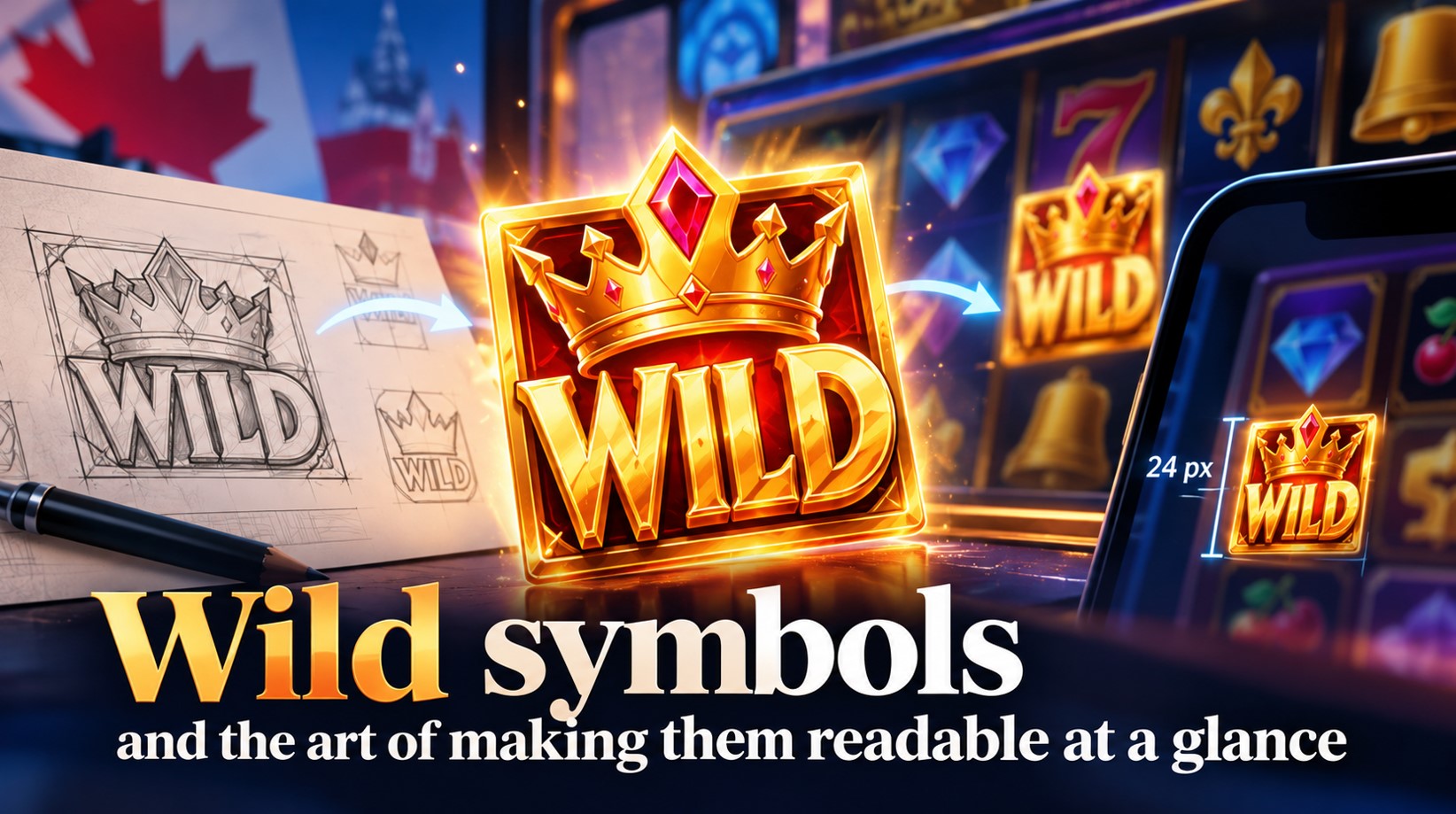
Designing Wild Symbols: The Art of Instant Readability
A slot artist can spend days refining a character, metallic frame, or burst of light that survives on screen for only a few seconds. A wild symbol presents an even tighter problem. It must belong to the visual world of the game while remaining identifiable inside a reel packed with competing shapes, numbers, and effects.
That makes a wild less like conventional illustration and more like interface design. Its artwork has to establish what the symbol is, distinguish it from other special symbols, and preserve that information when its state changes. Detail matters only after those tasks have been solved.
A Wild Symbol Has to Work Before It Has Time to Impress
Recognition is not the same as comprehension. A player can recognize a crown, animal or star immediately and still have no idea whether it is a wild, scatter, or ordinary high-value symbol.
That distinction becomes particularly important across the range of slots canada players encounter online. ToonieBet lists more than 5,000 casino games for customers in Canada outside Ontario, exposing the same screen to radically different illustration styles, reel structures and symbol conventions. For an artist, that variety makes consistency within each game more important, not less.
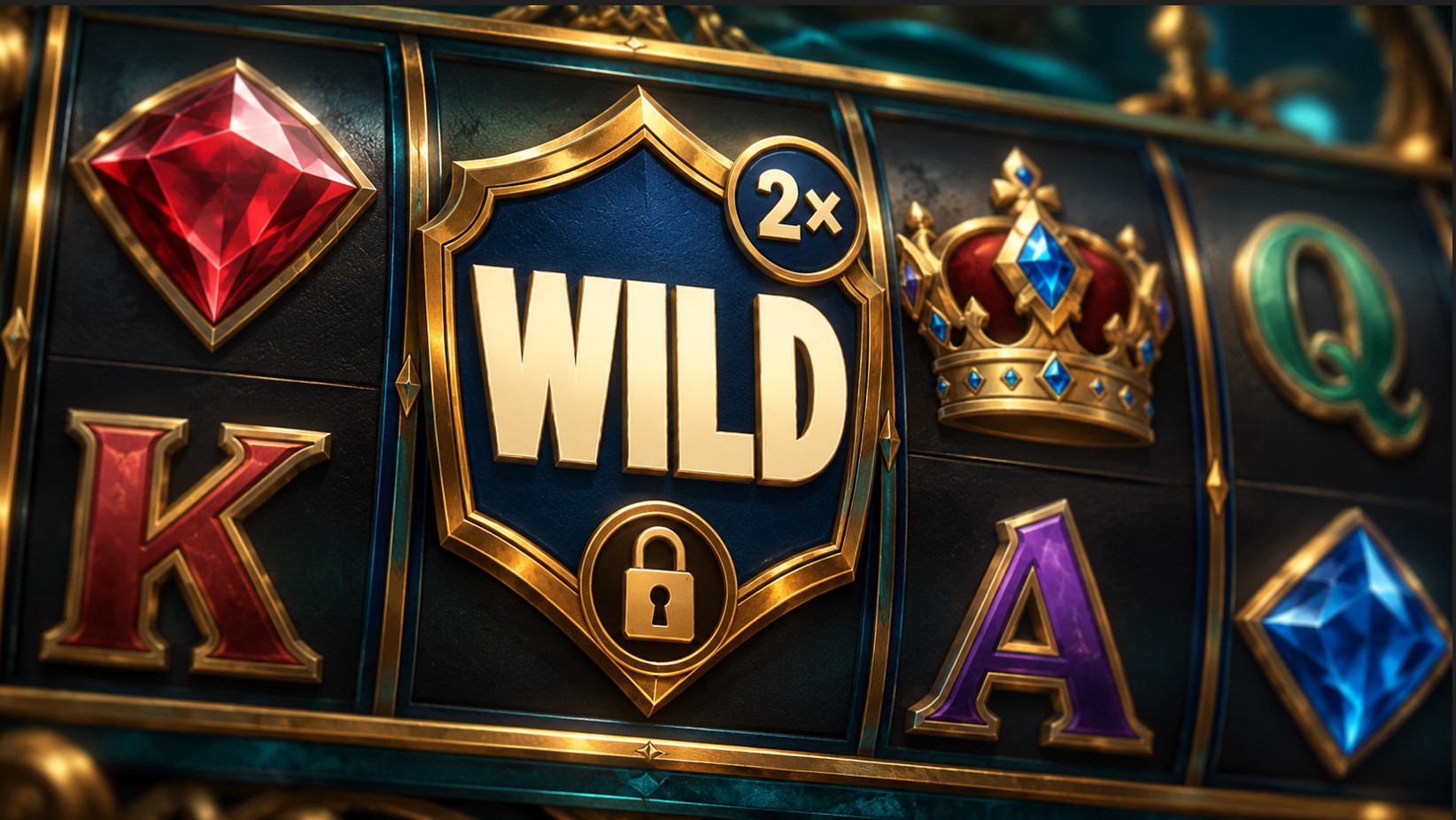
A wild may also change role during play. It can expand across several positions, remain fixed, move, or display a multiplier. The artwork therefore has to communicate both identity and state without forcing the viewer to decode every decorative element.
Silhouette Carries Information that Texture Cannot
The most revealing version of a symbol is often the stripped-down one.
Remove the lighting, material effects, and fine illustration. If the wild becomes difficult to distinguish from a scatter or another special symbol, surface detail has been doing too much of the work. A recognizable outline, recurring frame or stable placement for modifiers gives the asset a structural identity that remains visible after reduction.
Typography has similar limits. “WILD” may look prominent in a large art file but collapse once the symbol occupies a small portion of a phone display. Thin strokes disappear first. Highlights can cut across letters, while ornate backgrounds reduce the separation between text and image.
Colour can strengthen those cues, but it is a poor substitute for them. A persistent wild identified only by shifting from blue to violet asks colour perception to carry mechanical information. A border, lock mark or other persistent visual change communicates the same state through a second channel.
Contrast Changes Once the Asset Enters the Reel
Artwork is rarely viewed under the controlled conditions in which it was created.
An outline that appears crisp against a neutral working background may vanish beside another luminous symbol. Multiplier numerals can lose definition against animated textures. An expanding wild may occupy areas with different backgrounds from the original reel cell.
For that reason, contrast testing belongs inside representative game states rather than at the end of asset production. The label, modifier, edge treatment, and any state marker need to remain distinguishable when neighbouring reels are busy and effects are active.
Accessibility standards provide a useful discipline here because they discourage dependence on colour alone and establish measurable contrast principles. They do not prescribe how a wild must look. They expose where information has been attached to fragile visual cues.
Animation Has a Mechanical Job
Motion is most effective when it shows a change that would otherwise be difficult to describe visually.
An expanding wild needs to establish which positions are now covered. A locked wild must leave a persistent indication after the locking animation ends. Movement needs a visible origin and destination. If a multiplier changes, its new value must survive the surrounding effect.
The final frame matters more than the spectacle leading to it. Once particles, flashes and movement stop, the reel should still explain the state of the symbol without requiring the viewer to remember the animation.
This is where excessive effects can become counterproductive. If the animation is the only place where the mechanic is understandable, the interface loses information as soon as the animation finishes.
Small Screens Expose Weak Decisions Quickly
A detailed asset can look convincing at design resolution and fail when reduced into a dense mobile reel.
Interface guidance sometimes refers to roughly 24 pixels as a minimum dimension for interactive controls, but that figure is not a universal minimum for slot symbols. The more useful lesson is that scale has to be judged in context.
Artists need to inspect the smallest supported viewport with several demanding conditions present at once: neighbouring special symbols, long localized labels, multiplier badges, bright backgrounds and completed animations. Those combinations reveal thin lettering, weak outlines and decorative detail that competes with function.
Readability also has a responsible-gambling dimension. Visual effects should not suggest that the presence of a wild guarantees a payout or alters the probability of the underlying outcome. In Canada, gambling rules and minimum ages vary by province and territory. Gambling should be treated as paid entertainment, with spending and time limits used where appropriate; provincial responsible-gambling and self-exclusion services are available for anyone who needs support controlling play.
The artist’s task, then, is not to make the wild dominate the screen. It is to make sure the symbol still explains itself after theme, motion and reduction have stripped away everything that was easy about the original artwork.
P.S. If you want to support the BandurArt team of artists, content creators, and passionate game enthusiasts, consider sharing this post online.