Bloodborne 2: reading the signals between a confirmed silence and an obvious demand
There is no announced Bloodborne 2. Sony has not confirmed a sequel, FromSoftware has not announced one, and no retail listing, ratings board entry, or official trailer gives the project a name, a date, or a target platform. What exists instead is a long, well-documented pattern of public demand, careful non-denial from key decision makers, and a small stack of indirect comments that fans have parsed for years. For a GameDev reader, the useful question is not simply “will there be a Bloodborne 2” but rather “what would a real sequel to Bloodborne actually have to solve, given the original’s engine, design language, and place in Sony’s portfolio today.”
This article treats the topic as a case study in sequel viability, engine constraints, and design continuity. The goal is to separate reported signals from wishful thinking, then look at the production decisions a real follow-up would face: the aging Bloodborne codebase, the FromSoftware development cadence, the role of PlayStation as platform holder, and the design trade-offs between honoring the original and opening the world up for a modern audience. The evidence used here is limited to public statements, documented industry patterns, and well-attributed community reporting; nothing in this piece should be read as confirmation of a project that has not been officially announced.
What the public record actually says about a Bloodborne 2
The strongest evidence about any potential Bloodborne 2 is what has been said, and not said, on the record. That record is short, so it is worth being precise about each piece of it.
- FromSoftware president and creative director Hidetaka Miyazaki has publicly addressed the possibility of returning to the IP in interviews, typically describing it in terms of personal attachment rather than roadmap commitment. He has framed a return as something he would want to do “someday” or “if the opportunity arose,” not as a project in active development.
- Sony Interactive Entertainment owns the Bloodborne intellectual property, because it was published as a PlayStation 4 exclusive. That ownership matters: a sequel is a Sony-side portfolio decision, not a unilateral FromSoftware choice, even if the studio would be the natural developer.
- There have been multiple community-driven signals, including a long-running Wikipedia article on Bloodborne that documents reception, remaster rumors, and periodic fan campaigns. These are not announcements, but they show a sustained audience and a recurring news cycle.
- Re-releases, including the 2015 title’s availability on PlayStation Plus and informal PC ports, have kept the franchise visible without requiring a sequel. Sony’s silence on a true remaster is itself treated by observers as a strategic signal.
Reading those signals together, the most defensible position is that Bloodborne 2 is plausible, possibly internally discussed, and not currently announced. Everything beyond that is design speculation, which is useful only if it is grounded in how the original was built. The pattern across Sony first-party strategy over the last decade has been to delay announcements on beloved single-player IPs until the production is far enough along to commit to a date, which means the absence of news is not, on its own, evidence of a cancelled project.
It is also worth noting that the 2015 release was, for FromSoftware, a departure from its usual mid-budget self-publishing model. Bloodborne was co-funded and co-developed with Japan Studio, and that earlier co-development relationship is one of the reasons the project can sit in a legal gray zone where Sony, FromSoftware, and a defunct subsidiary all have a partial claim on the franchise’s future. Any real sequel would have to clear that organizational question before any creative question, and that alone can take years of internal negotiation.
Why Bloodborne still feels modern ten years later
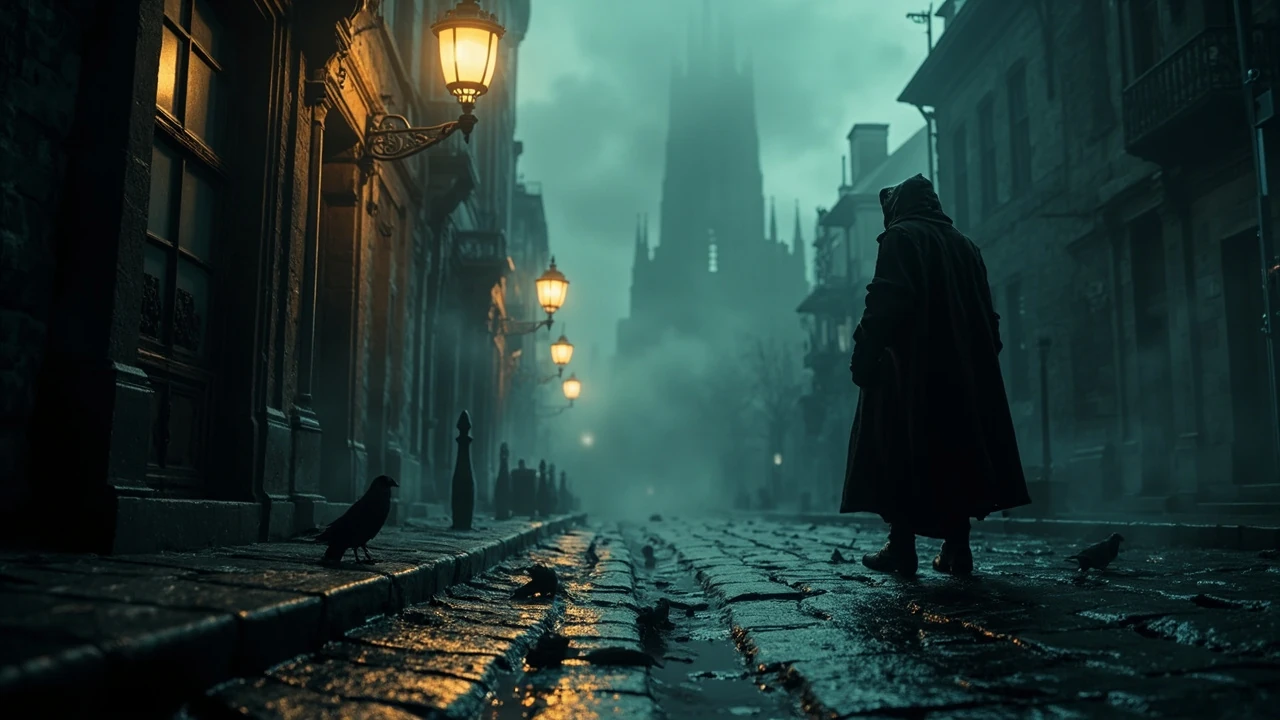
Before talking about a sequel, it helps to understand what the original Bloodborne actually did that still distinguishes it. The game shipped in March 2015 as a PlayStation 4 exclusive, built on FromSoftware’s internal engine and built around three deliberate design bets: an aggressive, stamina-driven combat loop that punishes passive play; a dense, interconnected Yharnam map that resists fast travel early and rewards exploration; and a world that trades the fantasy vocabulary of Dark Souls for a specific, internally consistent gothic horror vocabulary drawn from Lovecraft, Welsh myth, and early modern medicine. The Guardian’s contemporary review captured the result as elegant, precise, and difficult to put down, and that critical consensus has held up over the years, as documented across the Bloodborne review in The Guardian, which provides useful background for this point.
Three design decisions in particular are still doing real work for the franchise’s identity, and any sequel has to decide what to do with each one.
| Original design choice | What it actually controlled | Why a sequel cannot just copy it |
|---|---|---|
| Trick weapons with two forms per weapon | Combat tempo and build expression within a single slot | Players now expect more build diversity; flat weapon curves will feel restrictive |
| Limited healing via Blood Echoes and vials | Risk budget per encounter and pacing of exploration | Modern audience is more sensitive to “lose everything” frustration, especially after a long session |
| Interconnected Yharnam with one-way elevators and locked shortcuts | Discovery and spatial memory | Open-world competitors have changed expectations for navigation and quest tracking |
The trick-weapon system is the cleanest example. In Bloodborne, every weapon has a transformed state accessed by pressing L1, often changing moveset, damage profile, and role in combat. It is a beautiful solution to the Souls-style “weapon class” problem, because it doubles the effective arsenal without inflating inventory. A sequel has to decide whether the system still carries a full game on its own or whether it needs to be paired with something more, such as talent trees, ranged secondary weapons, or a deeper customization layer. The answer is not obvious, and that is exactly why the question matters.
The Blood Vial healing system is a close second. By tying recovery to a consumable that players have to gather mid-fight, the original made every encounter a small resource problem, not just a timing problem. That design turned quiet moments of farming into part of the game’s texture, and it forced players to learn the geography of each zone. A modern sequel has to weigh that depth against the modern expectation that a 60-hour game should not force players to grind a basic resource to keep playing. The honest engineering answer is that vials will probably stay in some form, but their scarcity and their relationship to checkpoints will be tuned much more gently than they were in 2015.
The interconnected Yharnam map is the third pillar, and it is the one most at odds with the direction the rest of the action-RPG market has gone. Elden Ring, Ghost of Tsushima, and Horizon Forbidden West all taught players to expect a fast travel point within minutes of starting a new region. A Bloodborne 2 that clings to a no-fast-travel opening could feel stubborn, and a Bloodborne 2 that hands out fast travel immediately could lose the spatial puzzle that made the original feel like a real place. The compromise that most designers would propose is a tiered travel system, with limited warps in the early game and full freedom in the late game, but every such compromise has to be playtested against the original’s pacing.
The engine problem no one likes to talk about
FromSoftware’s internal engine has evolved a lot since 2015. The studio shipped Dark Souls III in 2016, then moved to a modified iteration for Sekiro: Shadows Die Twice (2019), and again to a substantially rebuilt version for Elden Ring (2022) and Armored Core VI (2023). Each generation improved streaming, asset throughput, and lighting, and each generation was tightly bound to the project it shipped with. Bloodborne, meanwhile, still runs on the older iteration from 2015, and that has real consequences for a potential sequel.
A modern Bloodborne 2 would almost certainly not be built on the original’s engine, and the decision about which engine to use is not cosmetic. The trade-offs look roughly like this:
| Engine option | Pros | Cons | Likely fit for Bloodborne 2 |
|---|---|---|---|
| Reuse the 2015 Bloodborne engine | Visual continuity, lower toolchain risk, smaller team possible | Limited streaming, no real open world, asset reuse ceiling, frame-rate ceiling on modern displays | Poor; not viable for a flagship 2026 onward PlayStation title |
| Branch from the Dark Souls III-era engine | Proven for dense levels, familiar to veteran staff | Already showing its age in 2026; weak lighting and animation tools compared with current generation | Unlikely; possible only for a smaller, side-scoped project |
| Branch from the Elden Ring-era engine | Modern streaming, lighting, and animation; supports large open spaces and tall verticality | Tooling assumptions favor open-world design; would need retrofitting for the denser Yharnam-style level design | Most likely; best balance of capability and studio familiarity |
| Adopt an external engine (Unreal, etc.) | Cross-platform reach, large talent pool, modern rendering out of the box | Loss of FromSoftware’s bespoke toolchain, retraining cost, IP-style mismatch with previous titles | Possible for a co-developed or external-led project; not FromSoftware’s current pattern |
The key constraint is internal expertise. FromSoftware’s level designers and programmers have spent almost a decade working in engines that share lineage with the Elden Ring stack. Retrofitting that lineage to Bloodborne’s denser, less open level design is achievable but not free, and the studio would be paying that cost while also trying to preserve the original’s specific feel. That is a real production risk, and it is one of the reasons the project has not been casually announced.
There is also a tooling question that rarely surfaces in public discussion. The 2015 Bloodborne engine used bespoke animation blending and a custom physics layer for cloth, hair, and beast transformations. The Elden Ring-era engine inherited much of that, but the underlying assumptions were rewritten for mounted traversal and large open spaces. A vertical, tightly packed city like Yharnam stresses those systems in a different way: more AI agents in a smaller radius, more line-of-sight occlusion, more abrupt camera angle changes. The team would need to rebuild a meaningful slice of the engine’s urban handling, and that work is hard to estimate in advance because so little of FromSoftware’s recent catalog is urban in the way Yharnam is.
A secondary risk is asset reuse. Dark Souls III could pull from Dark Souls II because the engines were close cousins. Bloodborne 2, branching from the Elden Ring-era stack, would have a much smaller pool of directly reusable assets. The clothing, creature skeletons, and weapon silhouettes are all too specific to the original’s aesthetic to port without rebuilding, which means the art team would essentially be producing a full new visual library while also building new content. That is one of the quieter reasons a Bloodborne 2 costs more than a straightforward Dark Souls IV would.
Combat: the trick-weapon question and the rally mechanic
Bloodborne’s combat was a clean break from the Souls formula in three ways. The game dropped shields as a default defensive option, moved healing from a static resource to a consumable with a gather step, and introduced the rally mechanic, which lets a player recover a portion of recently lost health by attacking back within a short window. Together, those changes pushed the whole combat loop toward aggression, and the trick-weapon system gave players enough variety to express that aggression differently.
A sequel has to decide how much of that to keep. The pressure points are real and worth walking through one at a time.
- Aggression as a design value: The original works because nearly every system, from rally to the gun parry to the regainable health vial, rewards pressing forward. A modern sequel with longer sessions, more save-restart friction, and a more casual onboarding curve will feel different even if the rules are unchanged. The question is whether to preserve the aggression by doubling down on it or to soften it slightly to widen the audience.
- Rally as a learning tool: Rally is also a teaching system. It tells new players, in mechanical language, that retreating is more dangerous than attacking. A sequel that adds ranged magic, companions, or stealth may need to redesign or retire rally, because each of those systems changes the cost calculus that rally relies on.
- Trick weapons as identity: The trick-weapon pattern is now part of the franchise’s silhouette. Any sequel will keep it, but it will almost certainly expand the system. Possible directions include a third transformed state, modular parts that change moveset independently, or per-weapon upgrade paths that change stats without changing moveset. Each of those opens build variety but increases tutorial and balance surface area.
The honest answer is that combat tuning in a sequel is not a design question so much as a scope question. Every added system costs balance time, and FromSoftware’s late-game balancing pass is famously expensive. A real production plan for a Bloodborne 2 has to budget that time explicitly.
One often-overlooked combat question is how the sequel would handle firearms. In the original, firearms were a sidearm designed almost entirely around parry timing, not damage. They were a deliberate nerf to shields, because the parry window and the damage curve forced players into a single, very specific play rhythm. A modern sequel has to decide whether that gimmick still works or whether firearms should become a real damage source with parry as a secondary function. The first option preserves identity but risks feeling gimmicky to new players; the second option is more flexible but loses some of the original’s clean design purity. The most likely answer, based on FromSoftware’s recent work, is a middle path: firearms get more damage and ammo variety, but the parry window remains the central skill check.
Another open question is whether the sequel will add a dedicated magic layer. The original restricted Arcane builds to a small toolset, and that restraint was part of why the combat stayed legible. Elden Ring loosened that restraint significantly, and a Bloodborne 2 that fully adopts the Elden Ring Arcane system would be a different game. The defensible middle ground is to keep Arcane as a secondary scaling stat with a small, focused spell list, but every additional spell is another balance pass, and FromSoftware’s designers have been open in past interviews about how expensive that work is.
World structure: connected Yharnam versus open Lands Between
The original Yharnam is one of the great level designs of the generation. It is a single, tightly connected urban space with shortcuts that unlock in waves, almost no fast travel for most of the game, and a vertical layering that lets the cathedral hover over the streets you start in. That structure depends on specific design mechanics, especially the absence of quest tracking and the deliberate use of NPC dialogue that can be missed. Those mechanics will not survive a modern release without modification.
Elden Ring opened the Souls formula into a true open world, and that success has reset expectations. A Bloodborne 2 cannot pretend the audience has not seen and adapted to open-world design. The options for handling that pressure look like this:
- Stay tight. Reject the open-world trend and build a denser, more curated Yharnam successor. This preserves identity but caps commercial ceiling, because open-world action RPGs are currently the dominant genre on PlayStation’s flagship releases.
- Layer the world. Keep a dense hub city in the Souls style and surround it with explorable exurbs, wilderness, and a few optional legacy dungeons. This is a hybrid model and arguably the most defensible, but it splits level design effort and risks the open parts feeling thin compared with Elden Ring’s.
- Commit to open world. Design a larger, regional Bloodborne setting with multiple legacy dungeons and a true open map. This is the highest-reward option commercially and the highest risk aesthetically, because the original’s strength came from a single, unified visual idea.
FromSoftware’s own pattern suggests a hybrid is the most likely path, because the studio has used the Elden Ring engine for both Elden Ring and Armored Core VI and has shown it can flex between open spaces and tighter encounters. But “likely” is not “free,” and any hybrid would still need a unified art direction that does not feel stitched together.
There is also a question of verticality. Yharnam’s signature feeling is that the cathedral is always somewhere above you, both physically and narratively. An open-world Bloodborne 2 would have to find a way to keep that gravitational pull when the player can ride in any direction for twenty minutes without seeing the city. Elden Ring handled a similar problem with the Erdtree, a constant visual landmark that pulled the eye across a wide map. Bloodborne 2 would need its own equivalent, and that landmark has to be designed early because it shapes every zone that surrounds it. It is the kind of decision a real pre-production team would lock in the first six months, because changing it later is enormously expensive.
Narrative continuity: what the ending of the original actually says
For additional context, Bloodborne ends with three possible resolutions, each tied to a specific use of the umbilical cords and the Great Ones, and each of them is canonically uncertain because the game’s narrative is told through item descriptions, ambient dialogue, and visual storytelling rather than through cutscenes. A sequel does not have to pick one of those endings and stick to it. The franchise has, so far, left that question open, and that is a deliberate authorial choice. The three endings point in different thematic directions, and a sequel that wants to honor the original’s ambiguity has to make a conscious decision about which of those threads to follow.
There are essentially four narrative strategies a sequel could adopt:
- Soft canon: Pick one ending as the default for worldbuilding purposes while leaving the door open for the others in DLC, side content, or branching choices in the new game.
- Hard canon: Declare one ending as the only true ending, then write the sequel directly from it. This is the cleanest path and the most hostile to the original’s interpretive openness.
- No canon: Treat the endings as player choice and design a sequel that can accommodate all three. This is the most respectful path and the most expensive one, because the writing room has to keep multiple states in mind.
- Prequel or sidestory: Set the new game in a different part of the world or a different historical period, sidestepping the ending question entirely. This is the most common sequel strategy in horror franchises and the least interesting to the existing audience.
There is no obviously correct answer. The original’s narrative weight came from withholding information, and a sequel that reveals too much risks reducing that weight. This is the kind of decision a real production team would argue about for months before settling, and it is one of the reasons the project would need a dedicated narrative director with the authority to lock the call.
A further narrative question is how to handle the new player’s entry point. The original assumed the player had read at least some Lovecraft and was comfortable with cosmic horror as a register. That assumption no longer holds, and a modern sequel has to either preserve it (and accept a smaller audience) or soften it (and risk losing what made the world feel strange). The most defensible compromise is to keep the cosmic horror vocabulary but introduce it through gameplay rather than exposition, so the player feels the strangeness before any NPC names it. That is harder to write than it sounds, and it is one of the reasons narrative design on a Bloodborne 2 would be a slow, deliberate process rather than a sprint.
What the existing fan conversation actually wants
Audience feedback on a hypothetical Bloodborne 2 is a useful but messy signal. Players consistently ask for the same handful of things, and a production team would have to triage those requests against the studio’s actual strengths. The most common asks, in roughly the order they appear in community discussions, are:
- A modern remaster or remake of the original, with higher frame rate, better load times, and current-generation display support. This is a separate question from a sequel, but it dominates the conversation because the original is now difficult to play on modern displays.
- PC and Xbox Series releases. A multiplatform release would dramatically expand the player base, but it would also change Sony’s exclusivity logic and FromSoftware’s incentive structure.
- More build variety, often framed as “more weapons, more distinct playstyles.” This is a balance and content scope question, not just a feature request.
- Better covenant and multiplayer systems, often referencing Dark Souls III and Elden Ring as baselines. The original’s PvP and co-op are functional but aged.
- More accessible difficulty options, including finer-grained difficulty settings and better support for players with disabilities. This is a real and legitimate request, and the franchise has lagged here relative to peers.
- Stronger NPC questline handling, with fewer missable events and clearer signaling that a quest can be lost. This is a documentation and design issue, not a story problem.
None of these requests is unreasonable, but each one has a real production cost. A modern remaster alone is a six-to-twelve month project for a small team. Multiplatform porting adds certification complexity and changes the platform-holder relationship. More weapons and more covenants lengthen content production. Accessibility options require dedicated engineering time. The aggregate cost of saying yes to everything is a larger, longer, more expensive project, and the more expensive the project gets, the harder the greenlight conversation becomes at Sony’s side.
It is also worth being honest about a quieter segment of the fan base: the players who actively do not want a Bloodborne 2. Some veteran Souls players argue that the original’s strangeness was a one-time accident of timing, team composition, and platform constraints, and that a sequel would necessarily dilute it. That position is not a majority view, but it is loud enough to put real pressure on a creative team. A Bloodborne 2 has to satisfy the people who want more of the same, the people who want a bolder evolution, and the people who would prefer the franchise stay untouched, and the only way to do that is to ship a game with a very clear point of view.
What Sony’s portfolio logic actually looks like
From a Sony portfolio perspective, Bloodborne is a high-recall, mid-tier live-service question rather than a simple “should we make a sequel” question. The original has sold millions of copies, has a passionate audience, and has been kept visible on PlayStation Plus in waves. A sequel has to compete internally for funding and scheduling against established franchises like God of War, Horizon, Spider-Man, and the live-service bets Sony has been placing since 2022. The opportunity cost of a Bloodborne 2 is therefore the cost of not funding one of those other bets, and that is a real conversation that takes place before any public announcement.
There are also external pressures. The 2015 title is now hard to buy at retail, and a real remaster would unlock both nostalgic spend and new-player acquisition. That makes a remaster a more obvious commercial move than a sequel, at least in the short term, and it is the move Sony has so far declined to make publicly. The most defensible reading of that decision is that the platform holder is preserving optionality, holding the IP in reserve while letting the existing audience keep the franchise culturally active.
There is also the question of where Bloodborne sits relative to the other FromSoftware projects Sony has access to. Elden Ring’s success has raised the studio’s profile, and the appetite at Sony for a second, non-FromSoftware Souls-like project (think Lies of P, or a new internal IP in the same genre) is real. A Bloodborne 2 is one of several ways the platform could respond to that appetite, and it is not the only one. That competitive landscape matters because it directly affects how much Sony is willing to pay to keep the IP in-house versus licensing it elsewhere or letting it sit dormant.
Production realities a real sequel would have to budget
It is worth being explicit about the production realities, because they shape every design conversation above. None of the numbers here are sourced from internal documents; they are order-of-magnitude estimates based on comparable FromSoftware and similarly scoped Sony first-party releases.
| Production element | Realistic scope for a Bloodborne 2 | Comparable reference |
|---|---|---|
| Full development team | 150 to 300 internal staff at peak, plus external support for QA, localization, and motion capture | Elden Ring reportedly peaked at around 300 internal staff |
| Development timeline | Four to six years from concept to ship, with one to two years of pre-production | Souls and Elden Ring family of titles has generally shipped on a four to six year cadence per major release |
| Engine work | Significant retrofit of the Elden Ring-era engine to support denser, more vertical level design and a different art pipeline | Elden Ring’s engine supports open spaces; Yharnam-style level design would need new streaming, lighting, and occlusion tools |
| Content scope | One large hub area plus three to six legacy dungeons, with weapons, bosses, and NPC questlines in the same family as the original | Elden Ring had sixteen legacy dungeons and a far larger open world; matching that is not necessary, but undercutting it significantly is a risk |
| Audio and music | Full orchestral score plus adaptive combat layering, in line with recent FromSoftware releases | Elden Ring’s score was a major production effort and is now a baseline expectation |
The takeaway is that a real Bloodborne 2 would be a major production, not a side project. That is not a reason for or against the game existing; it is just the financial and scheduling reality Sony and FromSoftware would have to plan around.
It is also worth flagging the localization and accessibility work, which has grown steadily across the industry. A 2026 onward flagship title is expected to ship with full subtitles, multiple audio languages, remappable controls, and at least one difficulty accommodation. Each of those systems has its own QA loop, and each one interacts with combat and progression in ways that require design sign-off, not just engineering. FromSoftware’s recent titles have invested heavily here, and a Bloodborne 2 would inherit that investment rather than start fresh, but inherited systems still need to be tuned to the new game’s specific combat feel.
What a defensible announcement would actually look like
Because there is no announcement, it is worth being specific about what a real one would have to include to be credible. A defensible Bloodborne 2 announcement, in 2026 or later, would need to confirm at least the following:
- A platform holder, almost certainly Sony Interactive Entertainment, with explicit first-party or platform-exclusive commitment.
- A development studio, with FromSoftware as the strongest candidate and any external co-developer identified by name.
- A development engine or technology family, so the audience can calibrate expectations around features like frame rate, modding support, and accessibility options.
- A target platform list, including whether PC is in scope, because multiplatform support is now standard for Sony’s larger single-player releases.
- A release window, even a wide one, because a real production plan has a shipping target and an internal milestone schedule.
- A creative lead, ideally Hidetaka Miyazaki or a clearly identified successor, because the original’s identity is bound to its director’s voice.
None of those items has been confirmed publicly, and the absence of all six is a stronger signal than any single statement. The audience that wants a Bloodborne 2 is large, vocal, and patient, and a real announcement would not be ambiguous. Until those items are in place, the project is best understood as a possibility, not a fact.
One last point on announcement strategy: a real Bloodborne 2 reveal would almost certainly be paired with a playable demo or a long gameplay showcase, because the original’s identity is so bound to feel that a cinematic trailer alone would not be enough to convince skeptical fans. Sony and FromSoftware both know this, and any announcement that lands without that kind of follow-up is, in practice, a signal that the project is not as far along as fans hope.
Frequently asked questions
Has Bloodborne 2 been officially announced?
No. As of the most recent public statements, neither Sony Interactive Entertainment nor FromSoftware has announced a Bloodborne sequel. What exists is documented interest from the creative director, a long-running fan community, and a portfolio position at Sony that makes the project plausible without confirming it.
Is Hidetaka Miyazaki directing a Bloodborne 2?
There is no public confirmation that Miyazaki is directing a Bloodborne 2. He has spoken warmly about the IP in interviews and has suggested he would like to return to it, but he has not committed to a specific project, and his role on any future FromSoftware title would depend on internal studio planning.
Who owns the Bloodborne intellectual property?
Sony Interactive Entertainment owns the Bloodborne IP, because the original was published as a PlayStation 4 exclusive. That ownership makes a sequel a platform-holder decision in addition to a studio decision, and any external development arrangement would still require Sony’s sign-off.
What engine would a Bloodborne 2 use?
A modern sequel would almost certainly not reuse the 2015 Bloodborne engine. The most likely option is a branch of the engine family that powers Elden Ring and Armored Core VI, because that is where FromSoftware’s current tooling, animation pipeline, and lighting work live. Any engine choice would also have to support the denser, more vertical level design the original is known for.
Would a Bloodborne 2 be a PlayStation exclusive?
That is a Sony decision, not a FromSoftware one. Recent PlayStation single-player releases, including major first-party titles, have launched on PC alongside or after the console release. A Bloodborne 2 could follow that pattern, launch exclusively on PlayStation hardware for a defined window, or remain fully exclusive. None of those options has been announced.
What happened to the rumored Bloodborne remaster?
There have been multiple reports and community discussions about a remaster of the original Bloodborne, including suggestions of a native PC version. None of those reports has resulted in an official announcement from Sony or FromSoftware. The absence of a remaster is itself treated by observers as a portfolio signal, but it is not confirmation of a sequel either.
What kind of combat changes would a Bloodborne 2 need?
The original’s aggressive, stamina-driven combat and trick-weapon system would likely be preserved at the core, but the sequel would need to handle modern audience expectations around build variety, ranged combat, accessibility, and longer play sessions. The most defensible design choice is to preserve the original’s design vocabulary while expanding the build space, rather than rebuilding the combat from the ground up.
How does the original Bloodborne’s ending affect a sequel’s story?
Bloodborne has three possible endings, and the game does not declare any of them canon. A sequel would have to choose between declaring one ending canonical, accommodating all three, or sidestepping the question with a prequel or sidestory set in a different part of the world. Each option has real narrative and production cost, and the choice is one of the most consequential a creative director would make.
Why does the audience keep asking for a Bloodborne 2?
Bloodborne shipped in 2015 to strong critical reception, has been kept available in waves on PlayStation Plus, and has built a long-running community around its combat, level design, and gothic horror setting. A combination of nostalgia, frustration with the original’s aging technical presentation, and the franchise’s distinctive identity keeps the demand visible.
What would a Bloodborne 2 have to do to feel like a real sequel?
It would have to preserve the design identity that makes Bloodborne distinctive, including its trick-weapon system, dense level design, and gothic horror tone, while modernizing the technical baseline, expanding build variety, and accommodating a larger and more diverse audience. The bar is not just “make another FromSoftware game” but “make a game that is unmistakably Bloodborne and unambiguously a 2026 or later release.”