Popular Friendslop Games Are Designed to Be Abandoned
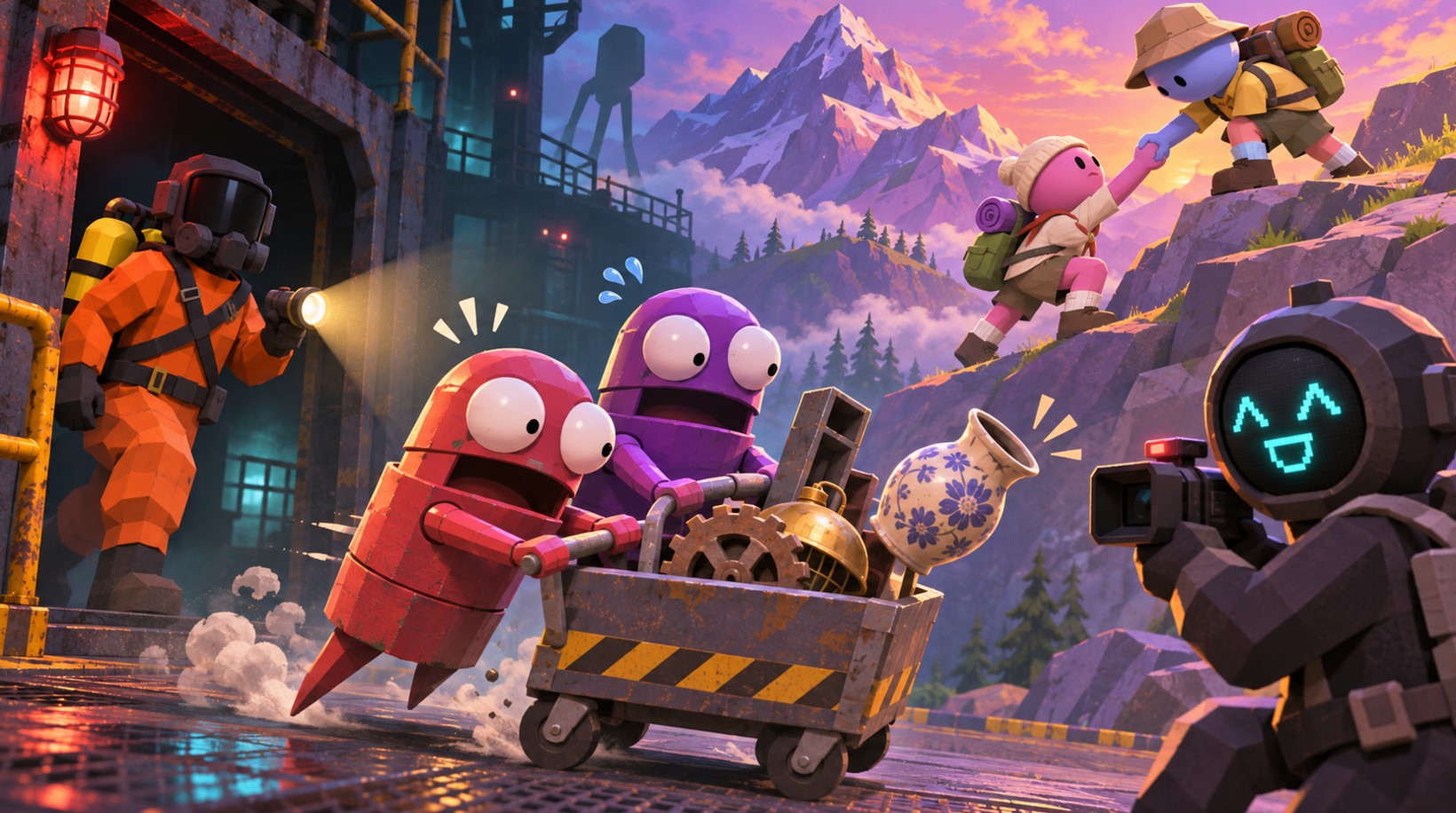
Content Warning kept 19.8% of its players after one day. After thirty days it kept about 3%. That looks like a catastrophe. It is not. Content Warning has around 13 million downloads and more than $77.6 million in revenue at $7.99 a copy, and the games that followed it have done the same thing, bigger. Friendslop as a category averages roughly 3% thirty-day retention – compared to 11.3% for Dead by Daylight and 5.3% for Phasmophobia. This genre does not want your year. It wants your weekend.
Once you see that, everything about these games makes sense: the price, the jank, the physics, the proximity chat, the fact that they are barely playable alone, and the fact that your group has burned through four of them since spring and will burn through four more by Easter. The disposability is the product.
So rather than another ranked list, here is how popular friendslop games actually work – the money, the decay curve, the traits, who is charting right now, and how to buy them without wasting cash.
The Money Is Genuinely Enormous!
| Game | Developer | Released | Price | Downloads | Revenue |
|---|---|---|---|---|---|
| Lethal Company | Zeekerss (solo) | Oct 2023 | $9.99 | 19M+ | $225M+ |
| R.E.P.O. | semiwork | Feb 2025 | $9.99 | 19M | $152M+ |
| PEAK | Aggro Crab and Landfall | Jun 2025 | $7.99 | 16.5M+ | ~$98M |
| Content Warning | Landfall Games | Apr 2024 | $7.99 | 13M | $77.6M+ |
| RV There Yet? | Nuggets Entertainment | Oct 2025 | $7.99 | 6.6M+ | $45.3M+ |
| Guilty as Sock! | Demon Max | May 2025 | $5.50 | ~1.1M | $5.8M+ |
Read the top line again. A solo developer made more than $225 million selling a game for ten dollars.
On the 2025 premium Steam sales charts, R.E.P.O. moved 18.5 million copies, PEAK 15.4 million, Schedule I 9.1 million and RV There Yet? 5.7 million. Those are four of the year’s biggest paid games on the platform, and the most expensive of them costs less than a cinema ticket.
PEAK’s launch trajectory is the one that broke people’s brains: over 100,000 copies in 24 hours, a million inside a week, two million by day nine, five million within a month, and past ten million by mid-August 2025. It started as a one-month game jam in South Korea in February 2025.
The Retention Cliff
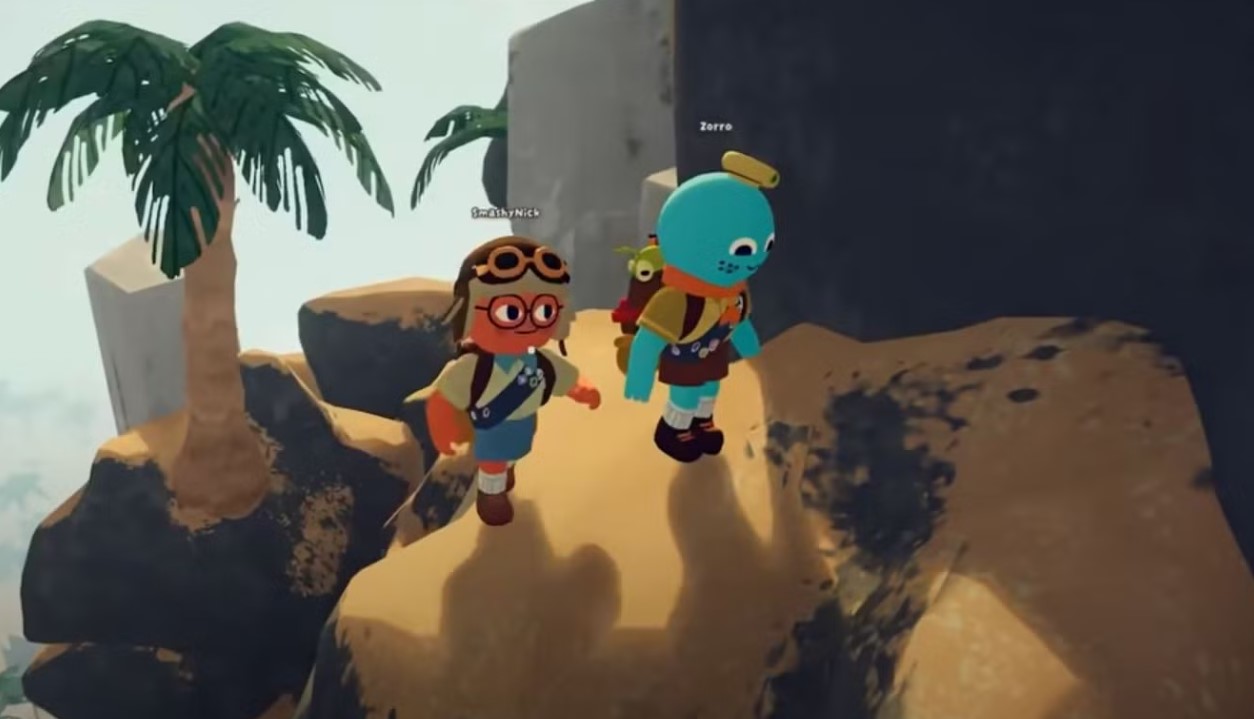
Here is the mechanism nobody puts on a recommendation list, and it is the single most explanatory fact about the genre.
Content Warning’s curve, day by day: 19.8% at day one, 4.4% at day seven, 3.6% at day fourteen, roughly 3% at day thirty. Four fifths of its players were gone within a week.
Set that against games built for retention. Dead by Daylight holds 36.7% at day one and still has 11.3% at day thirty. Phasmophobia runs 28.5% down to 5.3%. Ball x Pit, a completely different shape of game, starts at 68.1% and lands at 4.7%.
Friendslop opens lower and falls faster than almost anything else that sells in these volumes.
The reason is structural rather than a quality problem:
- The content is the group, not the game. Once your five friends have had the night where someone dropped the valuables, the novelty has been spent.
- Sessions need everyone present. Scheduling five adults repeatedly is harder than scheduling them once.
- They are explicitly worse alone, which removes the solo habit that keeps most games alive between group sessions.
- There is no progression to abandon. Nothing nags you to come back, because there is usually nothing to come back to.
- The next one is always three weeks away and also costs eight dollars.
Why Popular Friendslop Games Make Money Anyway
The economics are the inverse of a live-service game, and they work out. A traditional multiplayer game needs to keep you for months because it needs to sell you things. Friendslop charges once, cheaply, and needs you to persuade four other people to do the same thing on the same evening.
That is the whole trick: the purchase is social, not individual. Estimated group spend on a single friendslop title runs roughly $20 to $80, because the game is pointless unless the group buys in together. One person’s enthusiasm converts into four or five sales within an hour of a Discord message, and none of those five people need to still be playing in December.
The price band is deliberate. Most of these sit between $5 and $20 – Guilty as Sock! at $5.50, PEAK and Content Warning and RV There Yet? at $7.99, R.E.P.O. and Lethal Company at $9.99. At that price nobody negotiates. Nobody waits for a sale. Nobody asks how many hours of content there are.
Which means a 3% retention figure is not a warning sign to a friendslop developer. It is what the model assumes.
What the Word Actually Means?
Worth defining properly, since the term is doing real work now and is only a few years old.
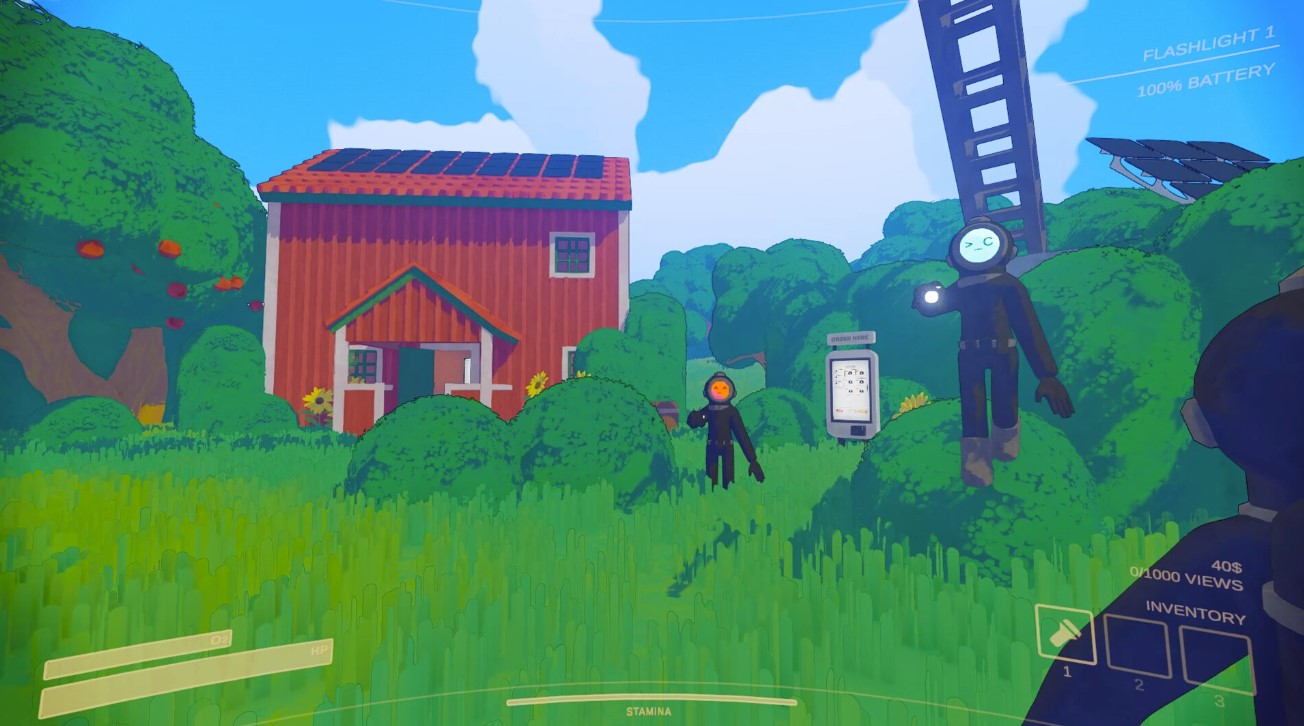
Friendslop describes cooperative indie games with a very low barrier to entry built around social play in friend groups. The name welds “friend” to the pejorative suffix “-slop,” reflecting cheap, low-fidelity games made to catch groups looking for something to do together online.
The lineage traces back to Among Us in 2018, with popularity accelerating during the pandemic when people leaned on these games to stay in contact. The term itself grew out of a tweet describing “friendfarming” as an indie trend, and PEAK in 2025 is what pushed it into mainstream gaming vocabulary – shifting it from an insult toward something closer to a descriptive label, though it still gets thrown at games perceived as cash-ins.
| Trait | How It Shows Up |
|---|---|
| Near-zero skill floor | Anyone can join and contribute in minutes, per Bushnell’s Law |
| Social play as the point | A team working toward one shared goal, such as climbing PEAK’s mountain |
| Extraction or quota loops | Hauling valuables or scrap out past hazards, as in Lethal Company and R.E.P.O. |
| Proximity voice chat | Often with character mouths synced to the player’s actual voice |
| Physics and low-fidelity 3D | Deliberately janky objects that behave unpredictably and comically |
| Under $20 | Cheap enough that the whole group buys without discussion |
| Worse alone | Routinely described as not much fun solo, by design |
That last row is the honest tell. A game that is explicitly less enjoyable by yourself has handed its entire entertainment value over to your friends, which is both the genre’s charm and the reason its retention looks the way it does.
The Roster, By Year
The category has a surprisingly clear family tree.
- 2018 – Among Us, the ancestor.
- 2023 – Lethal Company, Scary Baboon.
- 2024 – Content Warning, Webfishing.
- 2025 – PEAK, R.E.P.O., RV There Yet?, Guilty as Sock!, Mage Arena.
- 2026 – YAPYAP, Gamble with Your Friends, Flock Around, Meccha Chameleon, How to Fish, Monkeys Lair V2!
Note the acceleration. One game in 2018, two in 2023, two in 2024, five in 2025, and six already in 2026. That curve is what a gold rush looks like from the inside.
YAPYAP is the clearest illustration of where the genre’s inventiveness currently sits. Released February 3, 2026 by Vancouver’s Maison Bap for Windows and macOS, it has players casting spells by shouting into their microphones to smash objects in a procedurally generated tower, meeting a destruction quota across three nights per round, spending collected gold on wands that each carry their own spells. Every enemy can be fought off with spells except one, The Jester. It sold over 500,000 copies in its first week.
A game whose core input is your actual voice is friendslop refined to its purest form. The proximity chat is not a feature bolted onto the game – it is the controller.
What Is Charting Right Now
Concrete figures, because “popular” should mean something measurable.
On Steam’s monthly co-op charts, January 2026 had PEAK third with over 879,000 copies sold that month, RV There Yet? fourth with over 713,000, R.E.P.O. in the top ten at 527,000, and Phasmophobia still inside the top thirty at around 193,000. February 2026 put YAPYAP first with more than 905,000.
Those are monthly figures for games that are one to three years old, which complicates the decay story. Individual players churn out fast, but the titles themselves keep recruiting new groups for a surprisingly long time. The retention cliff is per-player, not per-game.
Phasmophobia is the instructive outlier here. Released September 2020 at $19.99, it has made over $285 million – more than any pure friendslop title – and holds roughly 192,000 daily and 1.8 million monthly active players. Its thirty-day retention of 5.3% is nearly double the genre average. It is the proof that a co-op game with a real progression system and a higher price can convert the same social impulse into something durable, which is the path most of these developers are not taking.
Elsewhere, the developer of Gamble with Your Friends celebrated a million sales this year, which is the kind of milestone that keeps the rush going.
How to Buy Popular Friendslop Games Without Wasting Money
Practical, and genuinely different from how you would buy anything else.
- Buy for a weekend, not a year. The 3% figure is your expectation setting. If your group gets two good nights out of eight dollars, that is a win and the game has done its job.
- Co-ordinate before purchasing. These are close to worthless alone, so a solo impulse buy is money gone. Agree the night first, then buy.
- One person should not test it first. A single player booting a friendslop game to evaluate it will have a bad time and report back wrongly. The game does not exist until there are four of you.
- Check the player cap against your actual group. PEAK runs up to four. YAPYAP runs up to five, though sources disagree and some reporting says six. R.E.P.O. and Content Warning take more.
- Do not wait for a sale. At $5 to $10 the discount is a dollar, and the window where your friends are all talking about a given game lasts about three weeks.
- Expect to move on, and let that be fine. The group that treats these as disposable gets more out of them than the group trying to make one into a hobby.
The Fight Over the Word
The term is contested, and the argument is more interesting than most genre-naming squabbles.
Jay Castello of Aftermath has argued friendslop is not a real genre at all, tracing the label’s rise to irritation at people dismissing whimsy and joy, and to the growth of games that are not about grinding and padding statistics.
Stuart Gillespie-Cook of House House pushed back on the word itself, noting that “slop” carries connotations of carelessness that do not fit these games, while still appreciating having a shared label for them.
Plenty of developers have embraced it. Aggro Crab’s community lead Paige Wilson – from the PEAK team – said they loved the term for bringing fresh excitement to co-op games. Panic Stations! has advertised its games as friendslop outright, while adding that people should only reach for the word if they want to.
And two broader readings are worth knowing. Harper Jay MacIntyre of Inverse connected the genre to the loneliness epidemic, calling it “a real path to salvation from divisive and isolating times.” Ash Parrish of The Verge flagged Nintendo Switch 2’s GameChat as significant potential for friendslop on console, which is the most likely next expansion for a category that has been almost entirely PC-bound.
That last point matters commercially. Every figure in this article comes from Steam. A genre built on voice chat landing properly on a console with voice chat built into the system software is a market roughly nobody has tapped yet.
What Is Coming…
Dear Passengers, from Kyiv’s studio Flexus Games, premiered its trailer on July 14, 2026 and reached number 12 on Steam’s most-wishlisted list within a week, gaining around 700,000 wishlists in 36 hours and passing 1.5 million shortly after. You play the crew of the world’s worst airline – one person flying while the others serve passengers and handle turbulence, bird strikes and dangerous cargo.
It also arrived with two controversies. Player names in the trailer drew criticism as references to Jeffrey Epstein, and a passenger appeared modelled on Donald Trump; the developer condemned Epstein’s actions and said all characters are fictional. Separately, a job posting mentioning generative AI prompted speculation about AI-made assets, which Flexus said was an old listing tied to mobile projects rather than this game, and which has since been revised.
Either way, 1.5 million wishlists before release tells you the appetite has not cooled.
FAQ
What does friendslop mean?
It describes cheap cooperative indie games with a very low skill floor, built around social play in friend groups, usually featuring proximity voice chat, janky physics, low-fidelity 3D and a price under $20.
What is the biggest friendslop game?
By revenue, Lethal Company, with more than 19 million copies and over $225 million from a solo developer at $9.99. R.E.P.O. follows at 19 million downloads and $152 million.
Why do these games lose players so fast?
Thirty-day retention averages around 3% because the entertainment is the group rather than the game, sessions need everyone present, there is usually no progression to return to, and they are deliberately less fun alone.
Is low retention a problem for the developers?
No. The purchase is social, so one enthusiastic player converts a whole group at $5 to $20 each, with estimated group spend of $20 to $80. The model never assumed you would stay.
Which friendslop game sold fastest?
PEAK, which passed 100,000 copies in 24 hours, a million in a week, two million by day nine, five million in a month and ten million by mid-August 2025 – from a game that began as a one-month jam project.
What is the newest big one?
YAPYAP, released February 3, 2026 by Maison Bap, where you cast spells by shouting into your microphone to hit a destruction quota. It sold over 500,000 copies in its first week and topped Steam’s co-op chart in February with over 905,000.
Is friendslop a real genre?
It is disputed. Jay Castello of Aftermath has argued it is not, and House House’s Stuart Gillespie-Cook objects to the implication of carelessness in “slop,” while developers including Aggro Crab and Panic Stations! have embraced the term.
The Genre That Knows What It Is
A live-service game charges you nothing and then spends two years engineering reasons for you to keep opening it. Friendslop charges you eight dollars, hands you one extremely good Thursday night, and then lets you go. The 3% retention figure that would end a producer’s career anywhere else is, here, simply the sound of a product being finished with.
The numbers suggest players understand the deal perfectly. Nineteen million copies of Lethal Company. Sixteen and a half million of PEAK. A million sales for Gamble with Your Friends. A million and a half wishlists for an airline comedy that is not out yet. Nobody is being tricked. They are buying an evening, and an evening is what arrives.
The open question is whether that scales past Steam. If Switch 2’s built-in voice chat does for friendslop what Discord did, the genre’s ceiling is a great deal higher than six games a year.
Until then, the correct approach has not changed since Among Us. Pick one, get everybody to buy it on the same night, play it into the ground over a fortnight, and let it go.
Already got the Discord message drafted? Share this, bookmark it, and go spend eight dollars on one perfect evening – and if creative or commercial collaboration brought you here, the BandurArt team is one message away.